Thematic maps and Martian landscapes · 110
Curiosities about Mars
Zoom with the mouse wheel inside the image or use the buttons. Drag the enlarged image with the hand cursor; swipe to move on a touchscreen.
Several rovers have photographed iron meteorites along routes only tens of kilometres long. Yet on a ten-kilometre walk on Earth we rarely encounter one. Why? Mars lies closer to their source in the asteroid belt. Each year, dozens of sub-metre asteroids large enough to make craters land there. Falls leaving intact meteorite rock or iron without a crater are even more common. Many bodies of this size burn up in Earth’s atmosphere. Mars has a thinner atmosphere, so smaller pieces have a better chance of reaching the ground. Mars also has no oceans to swallow them, forests to grow around them or people to collect them. Hundreds or thousands of hand-sized meteorites fall to Earth annually: 95% stone and 5% iron. Micrometeorites fall everywhere, even collecting in city roof gutters. On Mars, cosmic bodies have accumulated for millions of years.
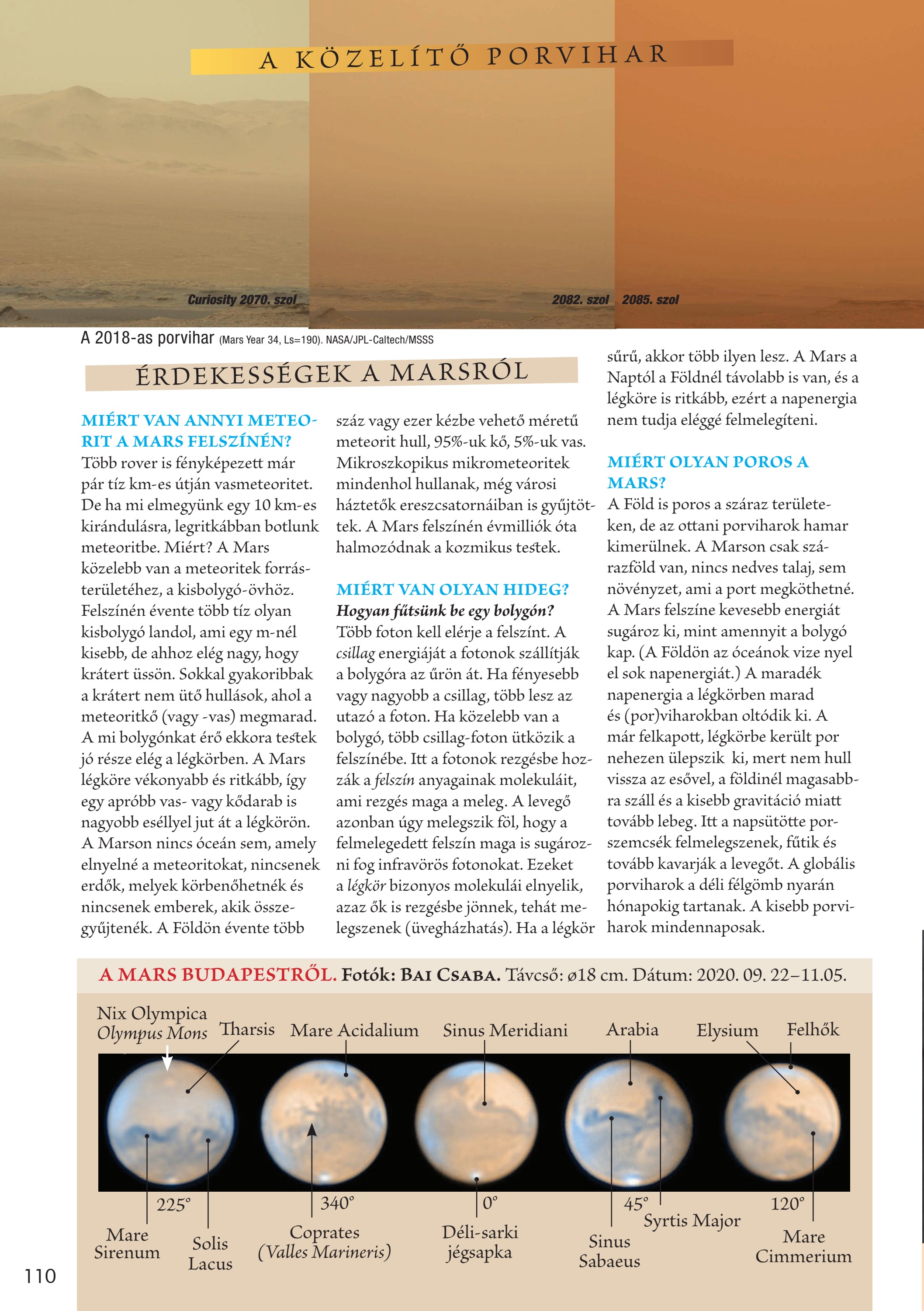
Dry parts of Earth are dusty too, but dust storms there soon exhaust their supply. Mars has only land, with no damp soil or vegetation to bind dust. Its surface radiates less energy than the planet receives; on Earth, oceans absorb much solar energy. The remaining energy stays in the Martian atmosphere and dissipates in storms. Airborne dust settles slowly because rain does not wash it down, it reaches higher altitudes, and lower gravity keeps it aloft longer. Sunlit grains warm and stir the air further. Global dust storms can last months during southern summer; smaller storms occur daily.