Introduction and use · 8
Cosmic structures
Zoom with the mouse wheel inside the image or use the buttons. Drag the enlarged image with the hand cursor; swipe to move on a touchscreen.
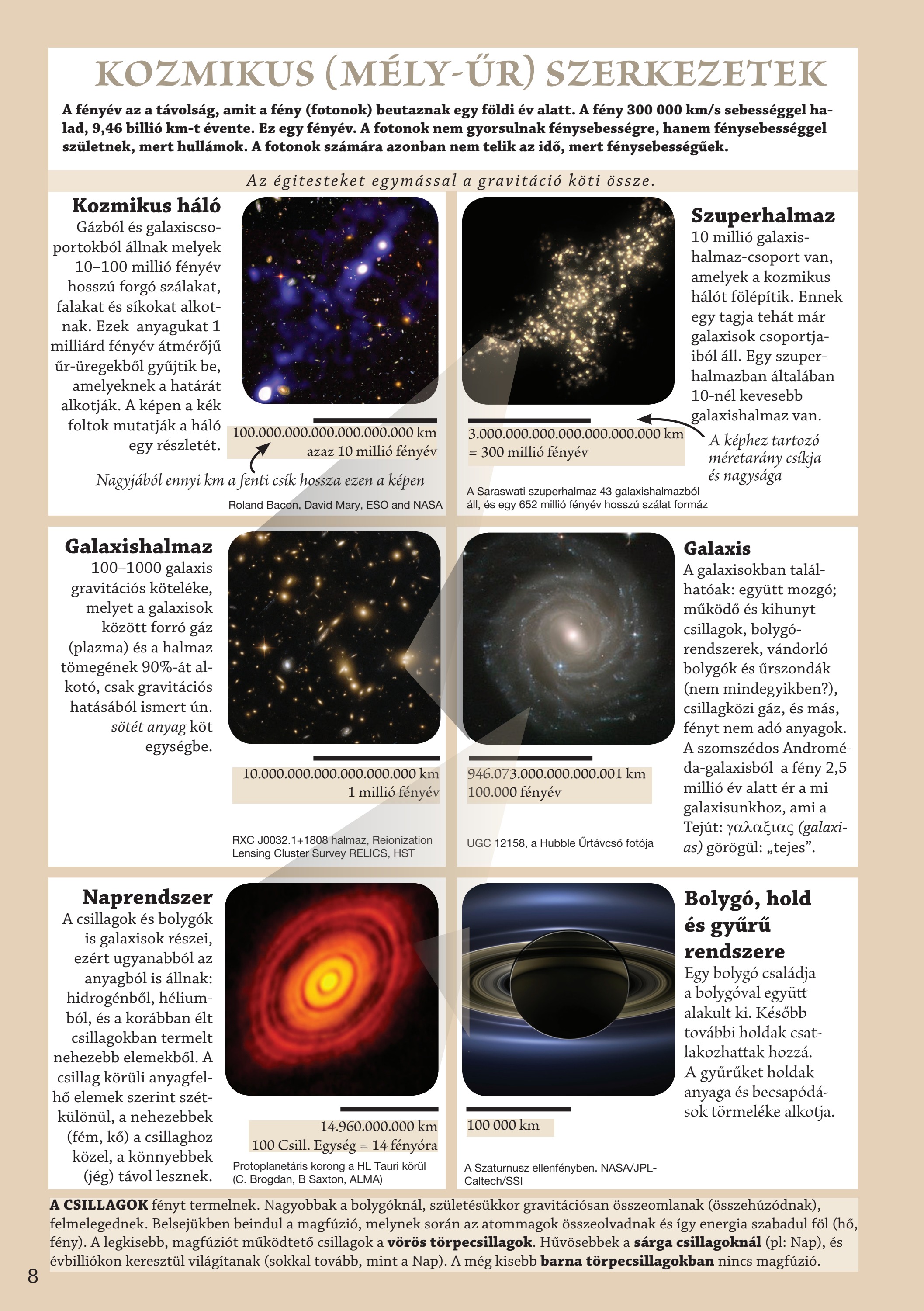
Cosmic web: Gas and groups of galaxies form rotating filaments, walls and sheets 10–100 million light-years long. They draw matter from the billion-light-year-wide voids whose boundaries they form. Blue patches in the picture show part of the web. Supercluster: Ten million groups of galaxy clusters make up the cosmic web. A single member therefore already consists of groups of galaxies. A supercluster generally contains fewer than ten galaxy clusters. Galaxy cluster: A gravitational association of 100–1,000 galaxies, bound together by hot intergalactic plasma and dark matter, known only through its gravity, which accounts for 90% of the cluster’s mass. Galaxy: Galaxies contain stars moving together, active and extinguished stars, planetary systems, wandering planets and spacecraft—not in every galaxy?—interstellar gas and other nonluminous matter. Light from the neighbouring Andromeda galaxy takes 2.5 million years to reach our Milky Way. The Greek word galaxias means “milky”.
Solar system: Stars and planets belong to galaxies and consist of the same materials: hydrogen, helium and heavier elements made by earlier stars. Matter around a star separates by composition: heavier materials such as metal and rock lie nearer, and lighter materials such as ice farther away. Planet, moon and ring system: A planet’s family formed with the planet. Additional moons may have joined later. Rings consist of moon material and impact debris.