Horváth, A., Bérczi, Sz., Sik, A., Pócs, T., & Szathmáry, E. (2014). Landing Site Proposals for Next Mars Landers: Possibility zo Explore Astrobiology Relevant Locations in the Southern Polar Region of Mars. 45th LPSC, #2416.Absztrakt (PDF) · Online forrás · Online forrás
Asztrobiológia
Az élet feltételei és lakhatóság
Kereszturi, A., Sz, B., Horvath, A., Pocs, T., Sik, A., & Szathmary, E. (2012). Possible circumpolar habitats on Mars. ESA Workshop on Mars. Budapest, 5-7. June.
Kereszturi, Á., Bérczi, Sz., Horváth, A., Pócs, T., Sik, A., & Szathmáry, E. (2012). The astrobiological potential of polar dunes on Mars.. In A. Hanslmeier, S. Kempe, & J. Seckbach (Eds.), Life on Earth and other Planetary Bodies (pp. 439–457). Springer Science+Business Media. https://doi.org/10.1007/978-94-007-4966-5_25
A fejezet azt vizsgálja, hogy a Mars évszakosan deres dűnéin kialakulhatnak-e átmenetileg az élet számára kedvező apró környezetek. Földi, szélsőséges körülményeket tűrő élőlényekkel és vízképződési számításokkal támasztja alá a lehetőséget; ez nem jelenti marsi élet kimutatását. Forrás
Kereszturi, A., Möhlmann, D., Berczi, Sz., Ganti, T., Horvath, A., Kuti, A., & Sik, A. (2010). Seepages and the Astrobiological Potential of Polar Dunes on Mars, chapter in Astrobiology: Physical Origin, Biological Evolution and Spatial Distribution, ed. Simon Hegedűs and Jakob Csonka, 2010. Nova Publishers, Hauppauge, NY, USA, ISBN: 978-1-60741-290-8.
Horváth, A., Bérczi, Sz., Kereszturi, A., & Sik, A. (2010). Shielding with Martian snow: suitable temperature and water vapor for possible living organisms. 38th COSPAR Congress, Bremen, 2010, July.
Ganti, T., Pocs, T., Berczi, Sz., Horvath, A., Kereszturi, A., Sik, A., & Szathmary, E. (2009). Ideal Microhabitats on Mars: The Astrobiological Potential of Polar Dunes. Lunar and Planetary Science XXXX, Abstract #1618, Lunar and Planetary Institute, Houston (CD-ROM).
Kereszturi, A., Bérczi, Sz., Horváth, A., Pocs, T., Sik, A., & Szathmáry, E. (2009). Northern and southern seepages on Mars and their astrobiological consequences. European Planetary Science Conference, EPSC2009-445, TP9, 13-18 Sept. Postdam, Germany.
Kereszturi, Á., Horvath, A., Berczi, Sz., Kereszturi, A., Sik, A., & Pocs, T. (2009). The possibility of life at the polar dunes of Mars: observations, analogues and modeling. Astronomy and Civilization, Budapest (Hungary), August 10-13, 2009.
Szathmáry, E., Horváth, A., Sik, A., Bérczi, Sz., Gánti, T., Pócs, T., & Kereszturi, Á. (2005). Signs of water runoff and its relation to possible living organisms on Mars. In EANA 5th European Workshop on Astrobiology (Abstract 2).
Bérczi, Sz. (2004). Astrobiology of Mars [Előadás]. 35th COSPAR conference. Paris, 2004 July 22. 12. ó.
Horváth, A., Gánti, T., Pócs, T., Bérczi, Sz., & Szathmáry, E. (2004). Astrobiology on Mars. 35. COSPAR Conference, 2004 July, Paris.
Bérczi, Sz. (2004). Asztrobiológiai tanácskozás Madridban. Aeromagazin, 44–45.
Bérczi, Sz., & Horváth, A. (2002). Képes beszámoló a Madridi Asztrobiológiai Központból. Aeromagazin, 4, 50–51.
Illés-Almár, E., Almár, I., Bérczi, Sz., & Lukács, B. (1997). On a Broader Concept of Circumstellar Habitable Zones. International Astronomical Union Colloquium, 161, 747–754. https://doi.org/10.1017/s0252921100015347
A tanulmány szerint a csillag körüli lakhatósági tartomány tágabb lehet, ha a napsugárzás mellett más tényezőket is figyelembe veszünk. Felveti az árapályfűtés és a víztől eltérő lehetséges oldószerek szerepét; ez elméleti lehetőség, nem lakott bolygók azonosítása. Forrás
Bérczi, Sz., & Lukács, B. (1994). On Necessary Conditions for Extraterrestrial Life. In B. Lukács, I. Kubovics, L. Stegena, & Sz. Bérczi (Eds.), Evolution of extraterrestrial materials and structures (MTA-KFKI-1994-22/C; pp. 117–146). MTA Központi Fizikai Kutatóintézet.
Lukács, B., Bérczi, Sz., Molnár, I., & Paál, Gy. (Eds.) (1990). Evolution: From Cosmogenesis to Biogenesis. MTA-KFKI-1990-50/C. Budapest (szerk.). (PDF, 1,6 MB)
Szimpózium, 1990, Budapest. KFKI-1990-50/C; Bevezetés és program.
Bioszignatúrák és életkeresés
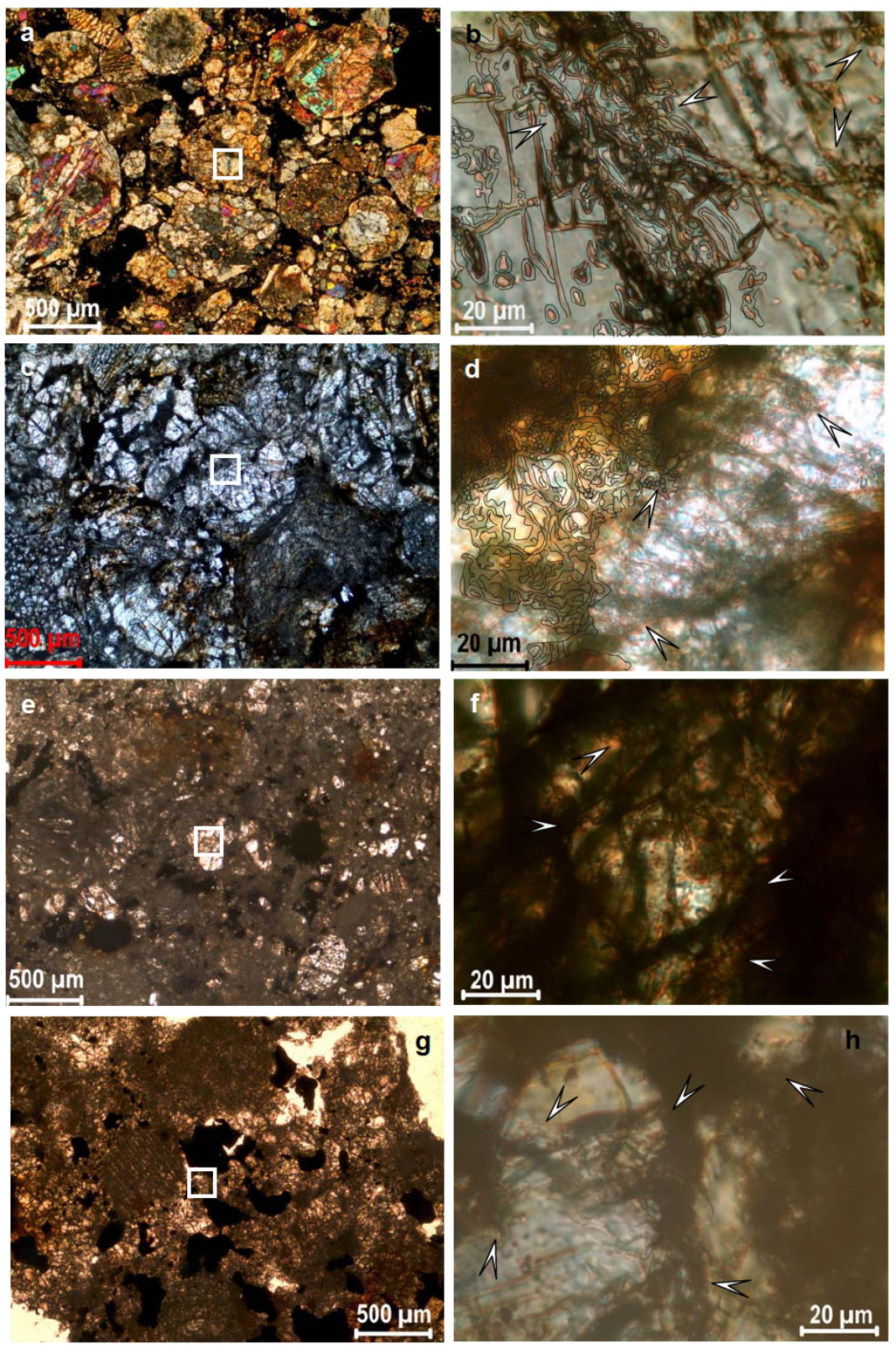
Polgári, M., Gyollai, I., Bérczi, Sz., Veres, M., Gucsik, A., & Elemér, P. (2019). Microbial mediation of textures and minerals – terrestrial or parent body processes?. Open Astronomy, 28(1), 40–60. https://doi.org/10.1515/astro-2019-0004Online forrás · Online forrás
Négy meteoritban mikroorganizmusokra emlékeztető szöveteket és hozzájuk kapcsolódó ásványokat vizsgálnak. A munka különösen a földi szennyeződés felismerését hangsúlyozza, és azt a nehéz kérdést járja körül, hogyan különíthetők el a földi és a korábbi szülőégitesti változások. Forrás
Bérczi, Sz., Polgári, M., Gyollai, I., & Gucsik, A. (2019). Putative microbial mediation. NASA lunar sample set: microtextural features at high magnification. EPSC, Vol. 13. EPSC-DPS2019-1-1, 2019.
Polgári, M., Gyollai, I., Bérczi, Sz., Veres, M., Gucsik, A., & Pál-Molnár, E. (2017). Microbial mediation of minerals – terrestrial or parent body processes?. Symp. Microbial mediation of minerals in meteorites and impact ejecta. Aarhus, EANA-17.Teljes szöveg (ResearchGate)
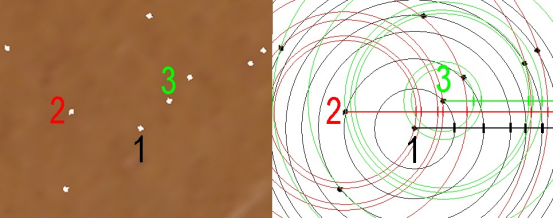
Vizi, P., Dulai, S., Marschall, M., Bérczi, Sz., Horváth, A., Hudoba, Gy., & Pócs, T. (2013). Possible Identification Method for Martian Surface Organisms by Using a New Strategy of Nano-Robots. 44th LPSC, #2281.
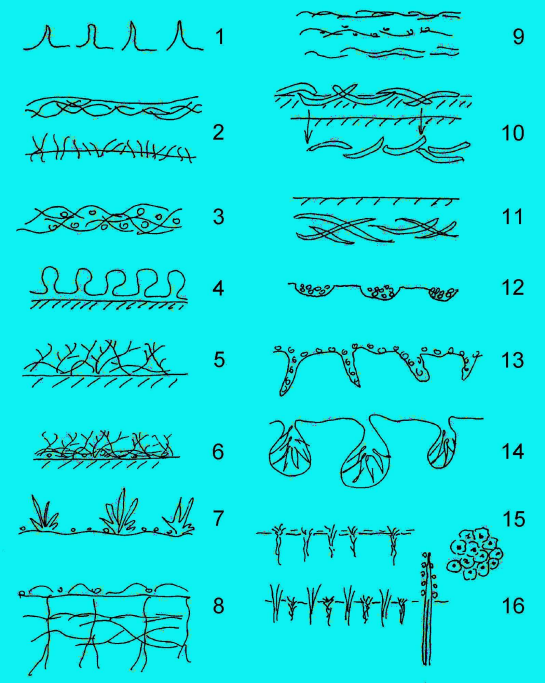
Pócs, T., Horvath, A., Ganti, T., Bérczi, Sz., Kereszturi, A., Sik, A., & Szathmary, E. (2007). Comparison of Surface Mineral Crusts and Cryptobiotic-Crusts: How Can They Help Life Support Mechanisms; Implications to Living Organisms on Mars. XXXVIII LPSC, #1144, LPI, Houston.
Pócs, T., Gánti, T., Horváth, A., Bérczi, Sz., Kereszturi, A., Sik, A., & Szathmáry, E. (2006). Comparison of the Cryptobiotic Crusts and Surface Mineral Crusts According to their Main Characteristics in Helping Life Support Mechanisms and their Implied Role for Martian Living Organisms. 30th NIPR Symposium Antarctic Meteorites, Tokyo, p. 99.
Bérczi, Sz. (2006). Comparison of the Cryptobiotic Crusts and Surface Mineral Crusts According to their Main Characteristics in Helping Life Support Mechanisms and their Implied Role for Martian Living Organisms [Előadás]. 30th NIPR Symposium Antarctic Meteorites, Tokyo, 2006 June 8. 14.15.
Bérczi, Sz. (2005). A marsi élet kutatása az anyag szerveződésének különböző szerveződési szintjein [Előadás]. MTA III. osztály előadói ülése 2005 nov. 9.-én.
Pócs, T., Szathmáry, E., Bérczi, Sz., Horváth, A., Gánti, T., & Kereszturi, Á. (2004). Criptobiotic Crust Types, as Earthy Analogues of Possible Martian Life Forms. 4. EANA Conference, 2004 November, Milton Keynes.
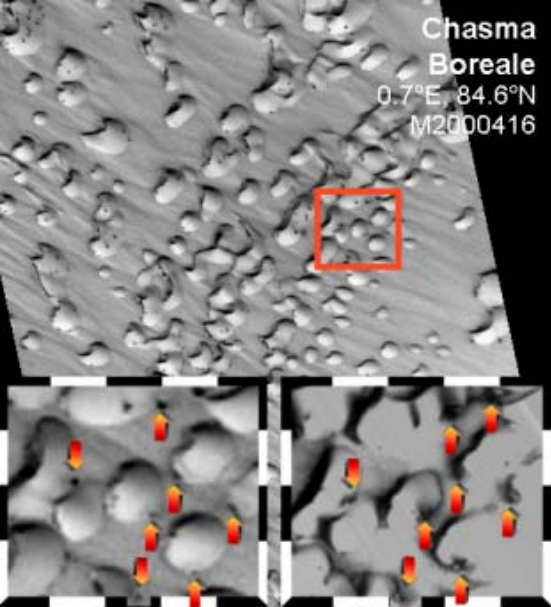
Horváth, A., Pócs, T., Gánti, T., Bérczi, Sz., & Szathmáry, E. (2004). On the possibility of crypto-biotic-crust on Mars based on northern and southern ringed polar dune spots. 35th LPSC, #1914, LPI, Houston.
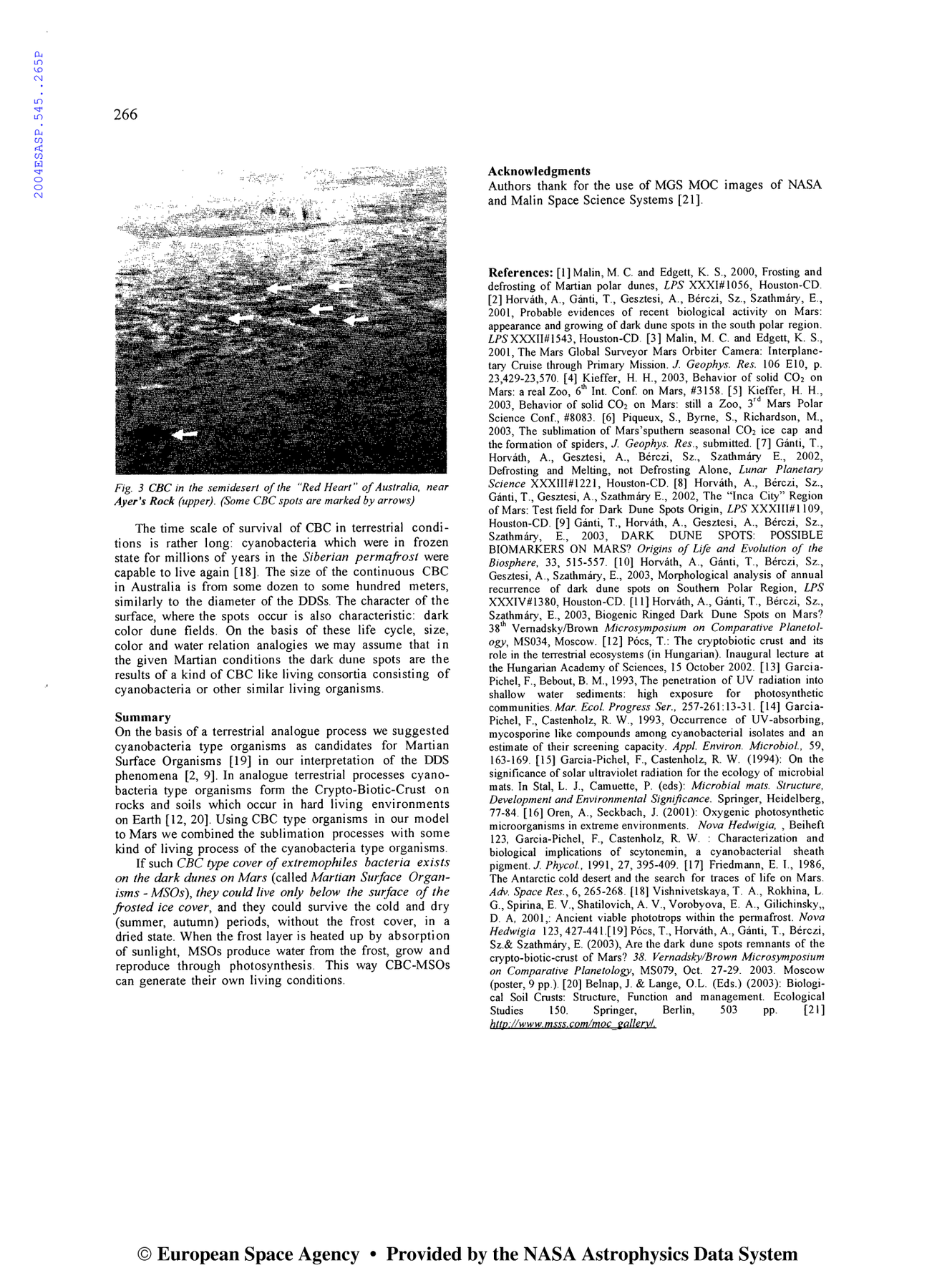
Pócs, T., Horváth, A., Gánti, T., Bérczi, Sz., & Szathemáry, E. (2004). Possible crypto-biotic-crust on Mars?. In R. A. Harris & L. Ouwehand (Eds.), Proceedings of the Third European Workshop on Exo-Astrobiology (ESA SP-545; pp. 265–266). ESA Publications Division.
Bérczi, Sz., Horváth, A., Gánti, T., Gesztesi, A., & Szathmáry, E. (2003). Vozmozhnoe dokozatelstvo nineshnej zhizni na Marse (Probable Evidence of Recent Life on Mars).. In Interkosmos-30 (pp. N/A).
Horváth, A., Gánti, T., Bérczi, Sz., Gesztesi, A., & Szathmáry, E. (2002). Annual Reappearance of Biogenic Dark Duna Spots on Southern Polar Region of Mars. 36th Vernadsky-Brown Microsymposium, Moszkva, MS-035.
Horváth, A., Chicarro, A., Gánti, T., Bérczi, Sz., Gesztesi, A., & Szathmáry, E. (2002). PossibleBiomarkers on Mars and the Mars Express. EGS XXVII General Assembly, PS-2 Mars exploration programmes, Nice, France, 21-26 April, 2002.
Bérczi, Sz. (2001). Search for ammonia containing life building blocks in Outer Solar System. Forum on Innovative Approaches to Outer Planetary Exploration 2001–2020, (Organized by NASA Headquarters and LPI. In LPI Contribution No. 1084. p. 5. Abstract #4006) Houston, Lunar and Planetary Institute, 2001 február 21. 14.45.
Bérczi, Sz., & Lukács, B. (2001). Search for ammonia containing life building blocks in Outer Solar System. In Forum on Innovative Approaches to Outer Planetary Exploration 2001–2020, p. 5. LPI Contrib. No. 1084. Lunar Planetary Institute, Houston.
Ismeretterjesztő munkák
TV1. A reggel. Arzén gazdag baktérium a Mono-tóból. Kozmikus anyagok vizsg. 2010, december 12, 7 óra 25 perc. (10 perces) [Televíziós vagy rádiós szereplés].
MRT Tudósfórum, Kossuth, hétfő du. 3-4-ig. Élet a Marson? Foltok tavasszal. 2000 aug. 14. (Bérczi, Lukács, Horváth András) [Televíziós vagy rádiós szereplés].
MRT Tudósfórum, Kossuth, hétfő 3-4-ig. Életesélyek a Naprendszerben. 1998 máj. (Almár, Marik, Bérczi) [Televíziós vagy rádiós szereplés].
TV. Az élet lehetősége a Titánon, űrkutatási eredmények. TV 2. 1998, január-február [Televíziós vagy rádiós szereplés].
További publikációk témánként
További kutatások
Hargitai, H., Borel, A., Csippán, P., Bodor, P., Hammer, F., Páva, R., & Sterk, B. (2023). SETI at Classroom. LPSC, abstract #1938.
Ferus, M., Adam, V., Cassone, G., Civis, S., Cuba, V., Chatzitheodoridis, E., Drtinova, B., LeFloch, B., Heays, A., Jheeta, S., Kereszturi, A., Knizek, A., Krus, M., Kubelik, P., Lammer, H., Lenza, L., Nejdl, L., Pastorek, A., Petera, L., …, Chernov, V. (2022). Ariel - a window to the origin of life on early earth?. Experimental Astronomy, 53, 679–728. https://doi.org/10.1007/s10686-020-09681-w
A tanulmány azt járja körül, hogyan segíthetnek a távoli bolygók megfigyelései a földi élet keletkezésének megértésében. Az Ariel űrtávcső számára olyan kémiai jeleket keres, amelyek az élet kialakulását megelőző folyamatokra utalhatnak. Forrás
Kisvárdai, I., Pál, B., & Kereszturi, Á. (2022). Investigating Pore Compaction Depth and the Habitability Potential of Icy Moons. LPSC, abstract #2082.
Edwards, C., Stamenkovic, V., Boston, P., Lynch, K., Tarnas, J., Sherwood-Lollar, B., Atreya, S., Templeton, A., Freeman, A., Fischer, W., Spohn, T., Webster, C., Fairén, A. G., Mustard, J. (., Mischna, M., Onstott, T. C., Osburn, M. R., Kieft, T., Grimm, R. E., …, Timoney, R. (2021). Deep Trek: Mission Concepts for Exploring Subsurface Habitability & Life on Mars — A Window into Subsurface Life in the Solar System. Bulletin of The American Astronomical Society, 53(4), 321. https://doi.org/10.3847/25c2cfeb.5f50cebc
A Deep Trek javaslat többféle küldetést vázol fel a Mars felszíne alatti környezet kutatására. Vízkereső mérésekkel és mélyebb fúrásokkal vizsgálná, rendelkezésre állnak-e az élethez szükséges feltételek, és kereshetők-e ott biológiai nyomok. Forrás
Phillips-Lander, C., Agha-mohamamdi, A., Wynne, J., Titus, T., Chanover, N., Demirel-Floyd, C., Uckert, K., Williams, K., Wyrick, D., Blank, J., Boston, P., Mitchell, K., Kereszturi, A., Martin-Torres, J., Shkolyar, S., Bardabelias, N., Datta, S., Retherford, K., Sam, L., …, Wiens, R. (2021). Mars Astrobiological Cave and Internal habitability Explorer (MACIE): A New Frontiers Mission Concept. Bulletin of The American Astronomical Society, 53(4), 347. https://doi.org/10.3847/25c2cfeb.cf124da3
A MACIE küldetéstervezet egy marsi lávacsőbarlangon keresztül jutna a felszín alá. A sugárzástól jobban védett, egyenletesebb környezetben vizsgálná a vízjég lehetőségét és az élet feltételeit, mélyfúrás nélkül. Forrás
Bérczi, Sz., Polgári, M., Gyollai, I., & Gucsik, A. (2019). Putative microbial mediation. NASA lunar sample set: microtextural features at high magnification. EPSC, Vol. 13. EPSC-DPS2019-1-1, 2019.
Kereszturi, Á., Prieto-Ballesteros, O., Blanc, M., Gomez-Elvira, J., & Westall, F. (2018). Evaluation of Instruments for Coming Europa Missions to Conduct Research on Astrobiology. LPSC, abstract #1946.
Vizi, P. G., Bérczi, Sz., Horváth, I., Horváth, A. F., & Vizi, J. Cs. (2015). Application of the fleet of Micro Sized Space-Motherships (MSSM) with Nano, Pico Space Devices and Robots (NPSDR) for life signal search on DDS sites using Global Digital Dune Database of Mars. 46. LPSC, #2788, LPI, Houston.Absztrakt (PDF)
Hargitai, Henrik (2012). Similarities of Tritonian guttae and Martian dark dune spots. EPSC, abstract #2012-261-2.
Pilat-Lohinger, E., Robutel, P., & Süli, Á. (2010). Dynamical habitability in multi-planetary systems resembling the Solar-system. EGU, abstract #EGU2010-14139.
Kereszturi, Á., Schmidt, F., & Vincendon, M. (2010). Searching for Water Ice in the Dark Dune Spots of Mars Using CRISM Data. LPSC, abstract #1714.
Simon, T., & Kereszturi, A. (2009). Online astrobiology course in Hungary. 40th Lunar and Planetary Science Conference (Abstract No. 1048). Lunar and Planetary Institute.
Mizser, A., & Kereszturi, A. (2003). The astrobiology matrix and the “Drake matrix” in education. 34th Lunar and Planetary Science Conference (Abstract No. 1114). Lunar and Planetary Institute.
Simon, T., & Sik, A. (2002). Astrobiology: The new synthesis. 33rd Lunar and Planetary Science Conference (Abstract No. 1629). Lunar and Planetary Institute.
Giber, K. (2002). Cultivation of iron bacteria on the Mars. 33rd Lunar and Planetary Science Conference (Abstract No. 1377). Lunar and Planetary Institute.
Bérczi, Sz., & Lukács, B. (2001). Search for ammonia containing life building blocks in outer Solar System. Outer Planets: The Ice Giants and Their Satellites (Abstract No. 4006). Lunar and Planetary Institute.
Bérczi, Sz., & Lukács, B. (2001). Search for ammonia containing life building blocks in outer Solar System. Outer Planets: The Ice Giants and Their Satellites (Abstract No. 4006). Lunar and Planetary Institute.
Sötét dűnefoltok referenciagyűjtemény
Kereszturi, Á., Bérczi, Sz., Horváth, A., Pócs, T., Sik, A., & Szathmáry, E. (2011). Dark Dune Spots as favorable locations for brine formation on Mars. In EGU General Assembly 2011: Conference Abstracts (Abstract EGU2011-7353). European Geosciences Union (EGU).
Horvath, A., Bérczi, Sz., Kereszturi, A., Sik, A., & Szathmáry, E. (2011). Observation of a Transitional Reversal During the Seasonal Defrosting of DDS at the Southern Polar Region of Mars. 42. LPSC, #1688, LPI, Houston.
Kereszturi, A., Bérczi, Sz., Horváth, A., Pócs, T., Sik, A., & Szathmáry, E. (2010). Astrobiological characteristics and possibility of life in the polar dark dune spots of Mars. In B. Hoover, V. Levin, Y. Rozanov, & C. W. Davies (Eds.), SPIE Proceedings (Article 78190K). SPIE. https://doi.org/10.1117/12.862839
A tanulmány azt mérlegeli, hogy a marsi sarkvidéki dűnék sötét foltjai lehetnek-e apró, átmenetileg lakható környezetek. Számítások és földi sivatagi példák alapján vizsgálja a víz, a sók és a hőmérséklet szerepét; ez lehetőségeket feltáró hipotézis, nem életkimutatás. Forrás
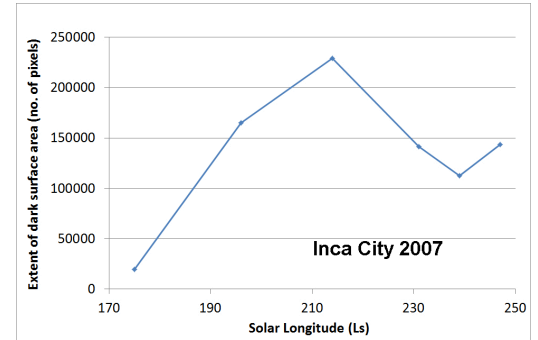
Horváth, A., Bérczi, Sz., Kereszturi, A., Sik, A., Pócs, T., & Szathmáry, E. (2010). Gradual Extension of Dark Dune Spots in the Vicinity of Spiders at the Inca City Region on Mars. 33nd NIPR Symposium Antarctic Meteorites, Tokyo, p. 26-27.
Bérczi, Sz. (2010). Gradual Extension of Dark Dune Spots in the Vicinity of Spiders at the Inca City Region on Mars [Előadás]. 33nd NIPR Symposium Antarctic Meteorites, Tokyo, 2010, June 9. 11.15.
Bérczi, Sz., Horváth, A., Kereszturi, A., & Sik, A. (2010). Microstructure on the surface of dark dunes in the polar regions of Mars. In Lunar and planetary science (Abstract 1671). Lunar and Planetary Institute.
Horváth, A., Kereszturi, Á., Bérczi, Sz., Sik, A., Pócs, T., Gánti, T., & Szathmáry, E. (2009). Analysis of Dark Albedo Features on a Southern Polar Dune Field of Mars. Astrobiology, 9(1), 90–103. https://doi.org/10.1089/ast.2007.0212
A Mars déli sarkvidékének olvadó dérborítású dűnéin sötét, lejtőirányú sávokat követnek űrfelvételeken. Több magyarázatot, köztük száraz szemcsemozgást és folyadékos folyamatokat mérlegelnek; a formák önmagukban nem bizonyítják folyékony víz jelenlétét. Forrás
Horváth, A., Bérczi, Sz., Sik, A., & Kereszturi, A. (2009). Comparison of the Dark Dune Spots on the Southern and Northern Polar Region of Mars. 32nd NIPR Symposium Antarctic Meteorites, Tokyo, p. 20-21.
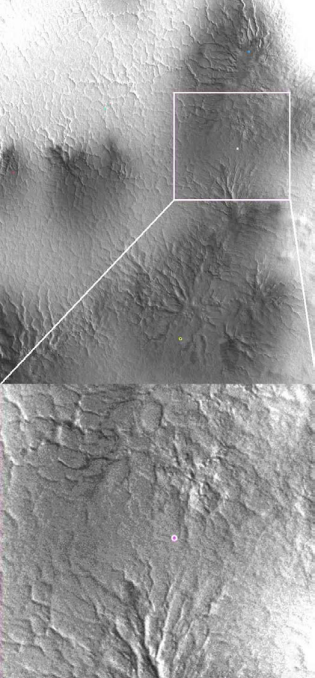
Horváth, A., Bérczi, Sz., Sik, A., & Kereszturi, A. (2009). Inca City” DDS Test Region in Mars: New Comparisons by MRO Data. European Planetary Science Conference, EPSC2009-294, TP9, 13-18 Sept. Postdam, Germany.
Bérczi, Sz., Horvath, A., Kereszturi, A., Sik, A., Ganti, T., Pócs, T., & Szathmary, E. (2007). Investigations of Martian seepages originated from Dark Dune Spots (DDS). In Space Week (pp. x).
Szathmáry, E., Gánti, T., Pócs, T., Horváth, A., Kereszturi, Á., Bérczi, Sz., & Sik, A. (2007). Life in the Dark Dune Spots of Mars: a testable hypothesis. Chapter 13. In R. Pudritz, P. Higgs, & J. Stone (Eds.), Planetary systems and the origins of life (pp. 241–262). Cambridge University Press.
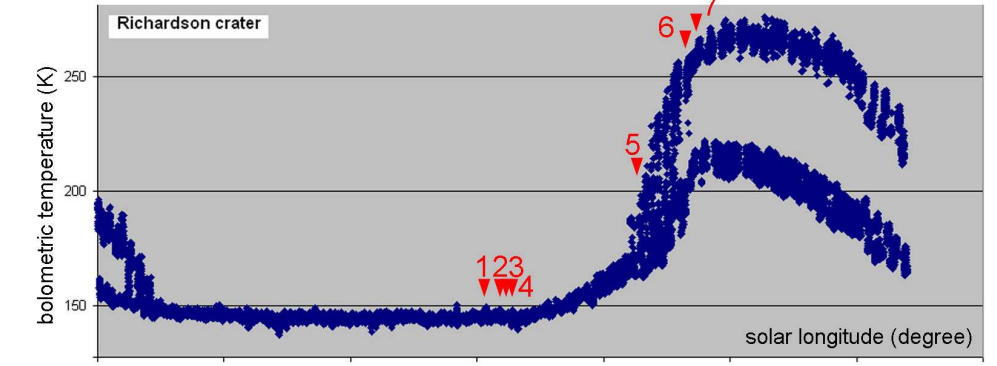
Berczi, Sz., Pócs, T., Horvath, A., Ganti, T., Kereszturi, A., Sik, A., & Szathmary, E. (2007). Possibility of transient liquid water on the dark dune fields of Mars. 31st NIPR Symposium Antarctic Meteorites, Tokyo, p. 7-8.
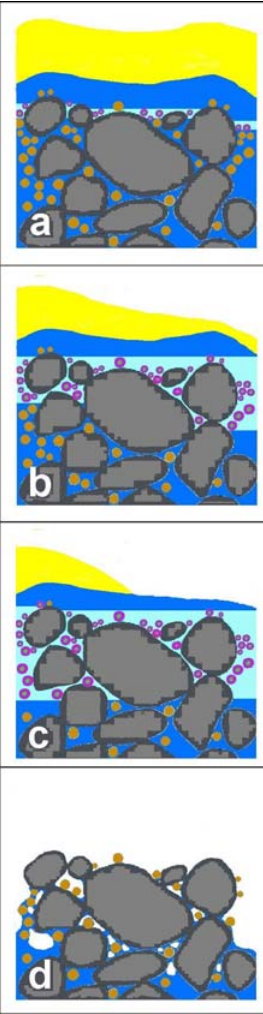
Gánti, T., Bérczi, Sz., Horváth, A., Kereszturi, A., Pócs, T., Sik, A., & Szathmáry, E. (2006). Hypotethical time sequence of the morphological changes in global and local levels of the dark dune spots in polar region of Mars. XXXVII LPSC, #1918, LPI, Houston.
Horváth, A., Gánti, T., Bérczi, Sz., Pócs, T., Kereszturi, Á., & Sik, A. (2006). Marsi sötét dűnefoltok: az élet lehetősége a Marson?. Magyar Tudomány, 41, 1357–1375.
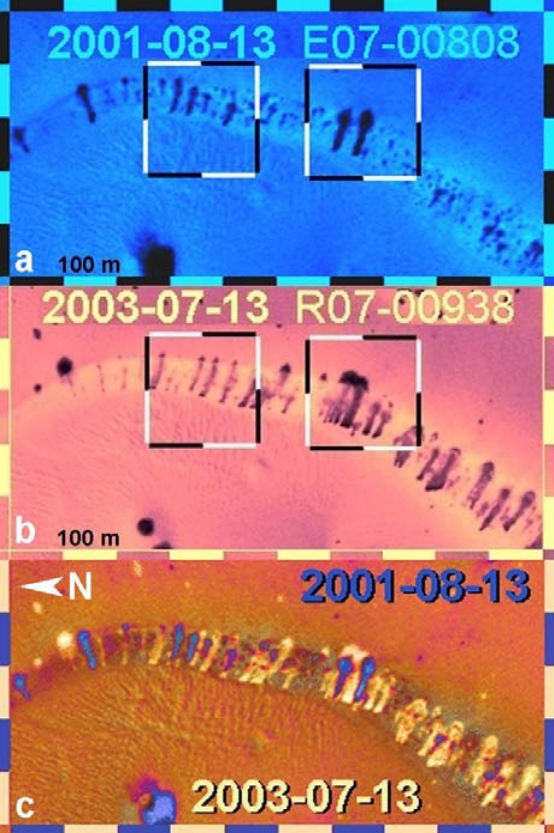
Horváth, A., Kereszturi, Á., Bérczi, Sz., Sik, A., Pócs, T., Gesztesi, A., Gánti, T., & Szathmáry, E. (2005). Annual change of Martian DDS-seepages. 36th LPSC, #1128. LPI, Houston.
Szathmáry, E., Horváth, A., Bérczi, Sz., Kereszturi, Á., Pócs, T., Gesztesi, A., Gánti, T., & Sik, A. (2005). Candidates for Organisms on Mars on the basis of DDS, CBC, Desert varnish and cryoconite studies. 1. Mars Express Science Conference, ESTEC, Noordwijk, (21-25 February 2005).
Bérczi, Sz., Horváth, A., Nagy, B., Kereszturi, Á., Sik, A., Pócs, T., Gesztesi, A., Gánti, T., & Szathmáry, E. (2005). Comparisons of Martian Flow-Streaks with DDS Origin and their Probable Counterparts on Antarctica. 29th NIPR Symposium on Antarctic Meteorites, Tokyo, p.3.
Bérczi, Sz. (2005). Comparisons of Martian Flow-Streaks with DDS Origin and their Probable Counterparts on Antarctica [Előadás]. 29th NIPR Symposium Antarctic Meteorites, Tokyo, 2005 June 8. 15.45.
Horváth, A., Bérczi, Sz., Kereszturi, Á., Pócs, T., Gesztesi, A., Gánti, T., & Szathmáry, E. (2004). Annual Change of Outflows from Dark Dune Spots in the Southern Polar Region of Mars. 4. EANA Conference, 2004 November, Milton Keynes.
Pócs, T., Horváth, A., Gánti, T., Bérczi, Sz., & Szathmáry, E. (2003). Are the Dark Dune Spots Remnants of the Crypto-Biotic-Crust of Mars?. 38th Vernadsky/Brown Microsymposium on Comparative Planetology, Oct. 27-29, Moscow, CD-ROM, poszter.
Horváth, A., Gánti, T., Bérczi, Sz., & Szathmáry, E. (2003). Biogenic Ringed Dark Dune Spots on Mars?. 38th Vernadsky/Brown Microsymposium on Comparative Planetology, Oct. 27-29, Moscow, CD-ROM, előadás.
Gánti, T., Horváth, A., Bérczi, Sz., Gesztesi, A., & Szathmáry, E. (2003). Dark Dune Spots: Possible Biomarkers on Mars?. Origins of life and evolution of the biosphere, 33(4-5), 515–557. https://doi.org/10.1023/a:1025705828948
A cikk a marsi sarki dűnék szezonálisan visszatérő sötét foltjait és változásaik sorrendjét elemzi. Felvet egy biológiai magyarázatot is, de a felszínformák megfigyelése önmagában nem igazolja, hogy élőlények hozták létre őket. Forrás
Horváth, A., Gánti, T., Bérczi, Sz., Gesztesi, A., & Szathmáry, E. (2003). Evidence for Water by Mars Odyssey is Compatible with a Biogenic DDS-Formation Process. Lunar and Planetary Science XXXIV, Abstract #1134, Lunar and Planetary Institute, Houston (CD-ROM).
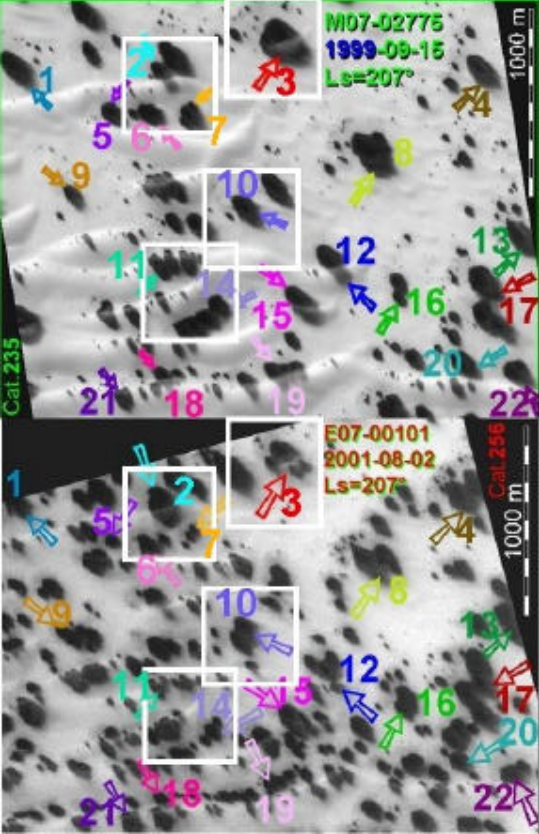
Horváth, A., Gánti, T., Bérczi, Sz., Gesztesi, A., & Szathmáry, E. (2003). Morphological Analysis of Annual Recurrence of Dark Dune Spots on Southern Polar Region. Lunar and Planetary Science XXXIV, Abstract #1380, Lunar and Planetary Institute, Houston (CD-ROM).
Horvath, A., Manrubia, S. C., Ganti, T., Berczi, S., Gesztesi, A., Fernandez-Remolar, D., Prieto Ballesteros, O., & Szathmary, E. (2003). Proposal for Mars Express: detailed DDS-test in the "Inca City" and "Csontváry" areas. EGS Conference, Nizza, EAE03-A-14142.
Horváth, A., Gánti, T., Bérczi, Sz., Gesztesi, A., & Szathmáry, E. (2002). DDS-Biomarker Hypothesis is Supported by Water Data of Mars Odyssey. 36th Vernadsky-Brown Microsymposium, Moszkva, MS-036.
Horváth, A., Gánti, T., Bérczi, Sz., Gesztesi, A., & Szathmáry, E. (2002). Morphological Analysis of the Dark Dune Spots on Mars: New Aspects in Biological Interpretation. Lunar and Planetary Science XXXIII, Abstract #1108, Lunar and Planet. Institute, Houston (CD-ROM).
Bérczi, Sz., Horváth, A., Chicarro, A., Gánti, T., Gesztesi, A., & Szathmáry, E. (2002). Seasonal Change and Annual Appearance of Biogenic Dark Dune Spots on Mars. In EGS XXVII General Assembly, PS-2 Mars exploration programmes (pp. N/A).
Horváth, A., Bérczi, Sz., Gánti, T., Gesztesi, A., & Szathmáry, E. (2002). The "Inca City" Region of Mars: Testfield for Dark Dune Spots Origin. Lunar and Planetary Science XXXIII, Abstract #1109, LPI, Houston (CD-ROM).
Horváth, A., Gánti, T., Bérczi, Sz., Gesztesi, A., & Szathmáry, E. (2002). “Biogenic” Dark Dune Spots on Mars and Probable Antarctic Analogues. 27th NIPR Symposium Antarctic Meteorites, Tokyo, p. 37-39.
Bérczi, Sz. (2002). “Biogenic” Dark Dune Spots on Mars and Probable Antarctic Analogues [Előadás]. 27th NIPR Symposium Antarctic Meteorites, Tokyo, NIPR 2001, June 13, 14.15.
Bérczi, Sz., & Horváth, A. (2001). DDSs as biomarkers: Data: location, morphology, variations. Potential Biomarkers on Mars [Előadás]. Symposium. Newton Room. ESA ESTEC, Nordwijk, 2001, október 5. 10.15-10.46.
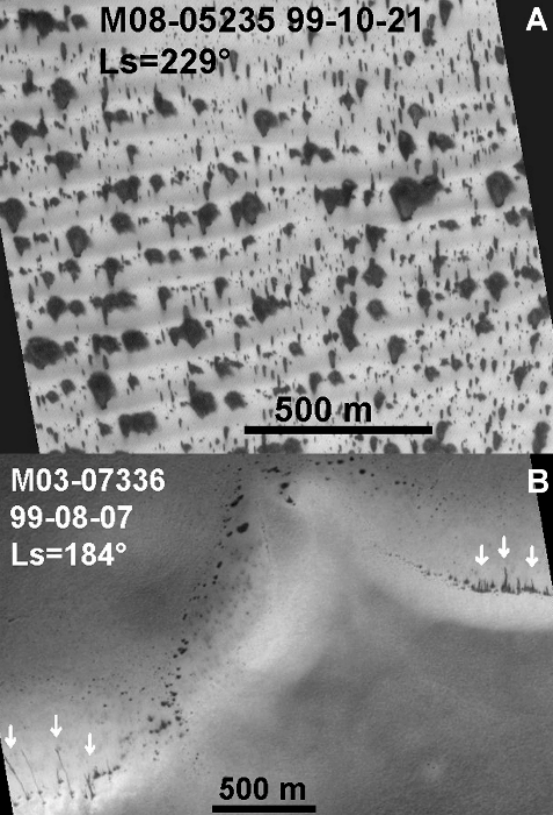
Horváth, A., Gánti, T., Gesztesi, A., Bérczi, Sz., & Szathmáry, E. (2001). Probable evidences of recent biological activity on Mars: Appearance and growing of Dark Dune Spots in the South Polar Region. Lunar and Planetary Science XXXII, Abstract #1543, Lunar and Planetary Institute, Houston (CD-ROM).