- Stages shown in thin sections of NASA Lunar Samples and NIPR Antarctic Meteorites
Chondritic Parent Body Evolution
1994-1997. Sz. Bérczi, B. Lukács, T. Földi, Á. Holba, S. Józsa,
G. Marosi, L. Szabó-Soki, Gy. Szakmány
Eötvös University, Budapest, Hungary.
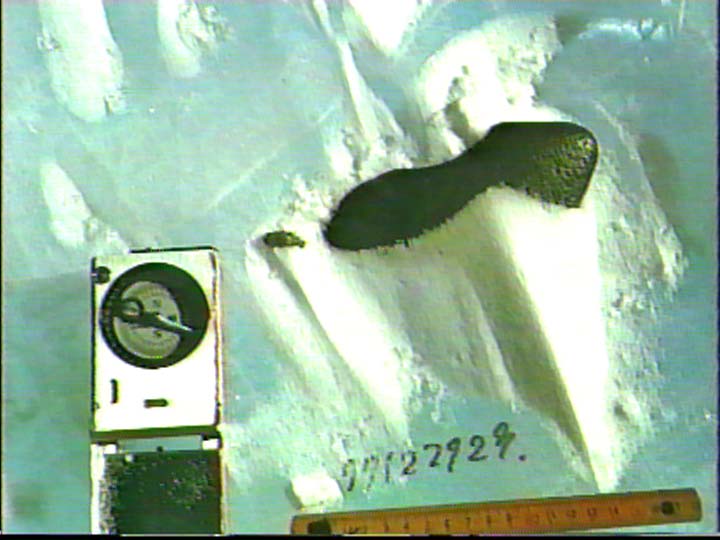
Source: Antarctica

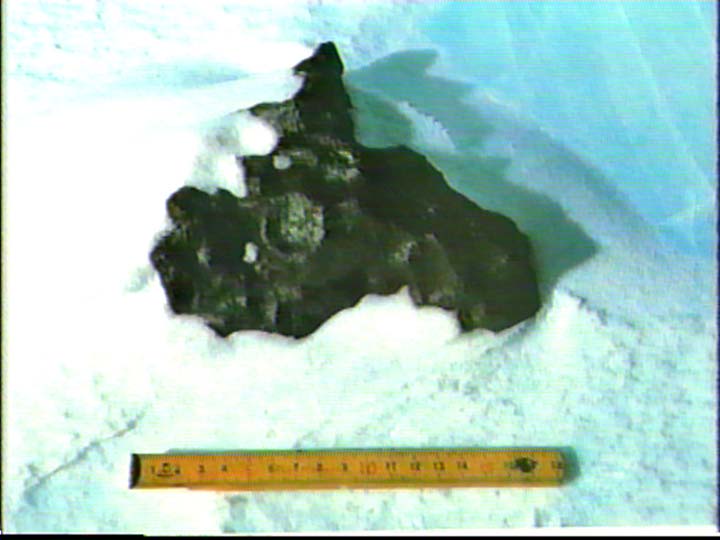
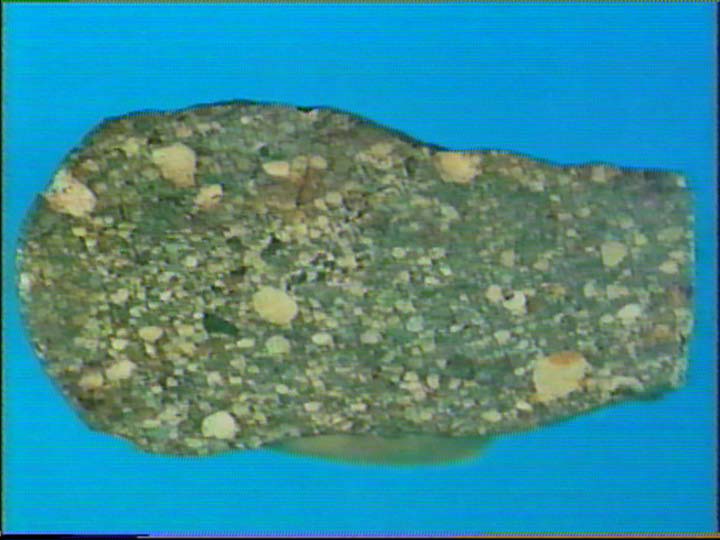
Chondrules and Matrix
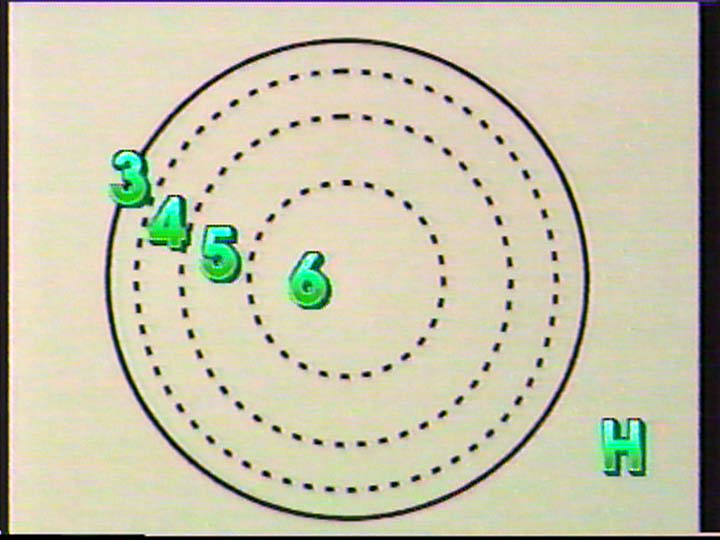
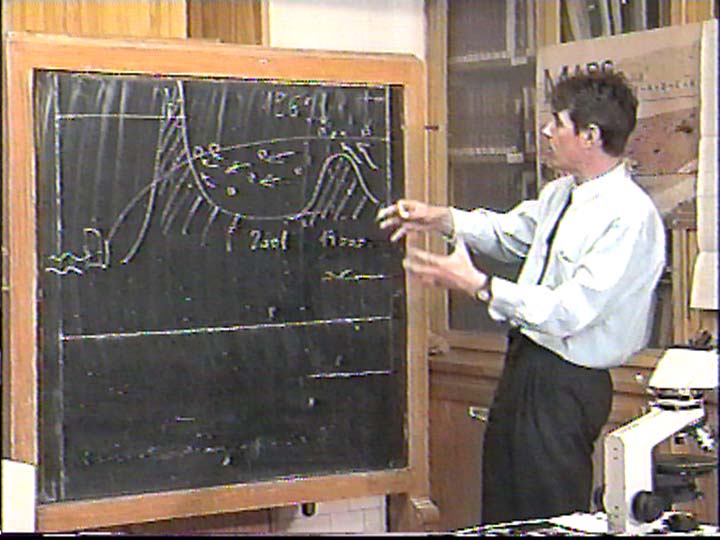
H 3-6 Layers in a asteroid. Chonditic textures form metamorphic sequences: Van Schmus - Wood Petrologyc Classes No. 3. -6.
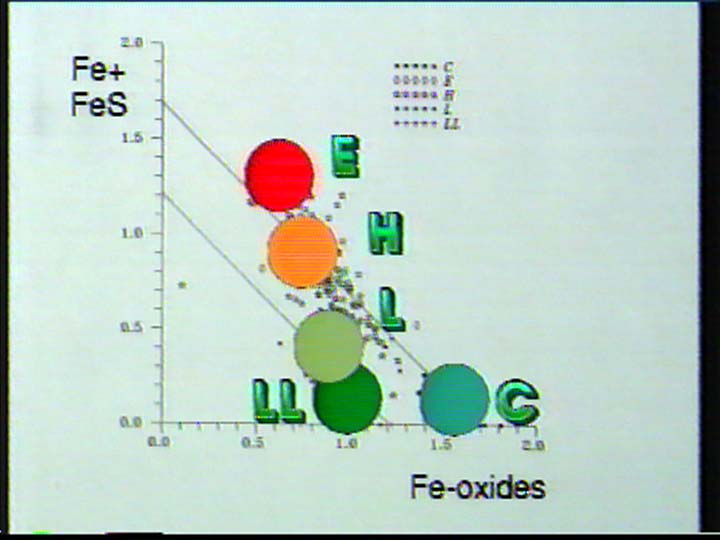
Sequence: E, H, L, LL, C types
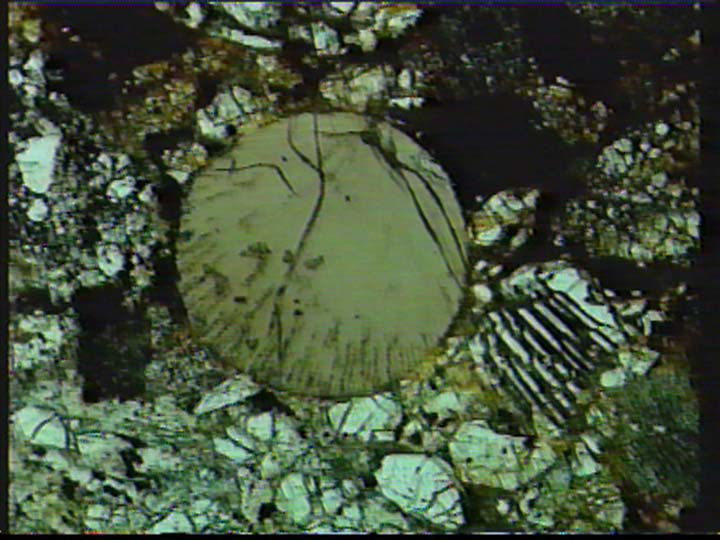
H3 Class: Sharp chondrule Boundaries, Chondrules and Matrix unequilibrated.
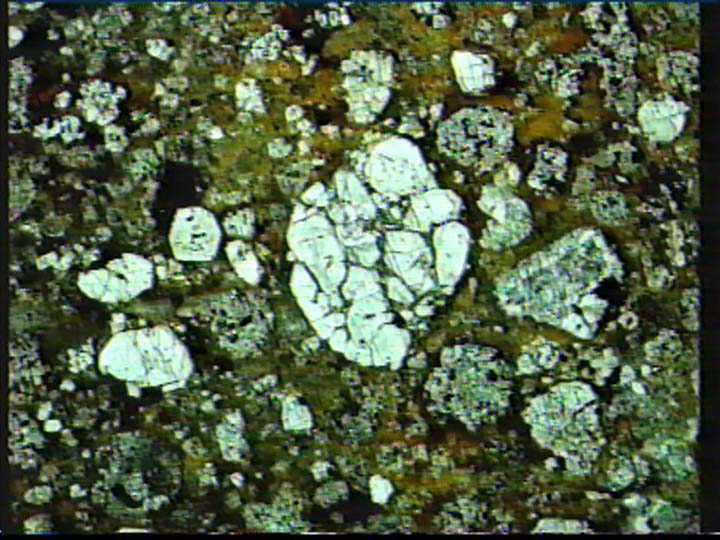
Between 3 and 4. Classes, Thermal metamorphosis causes 3 main events: Equilibration, Reduction, Chondrule boundary fading.
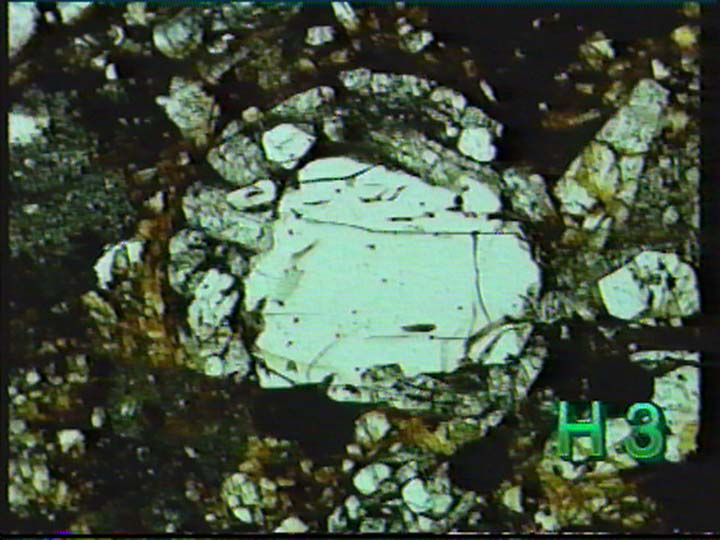
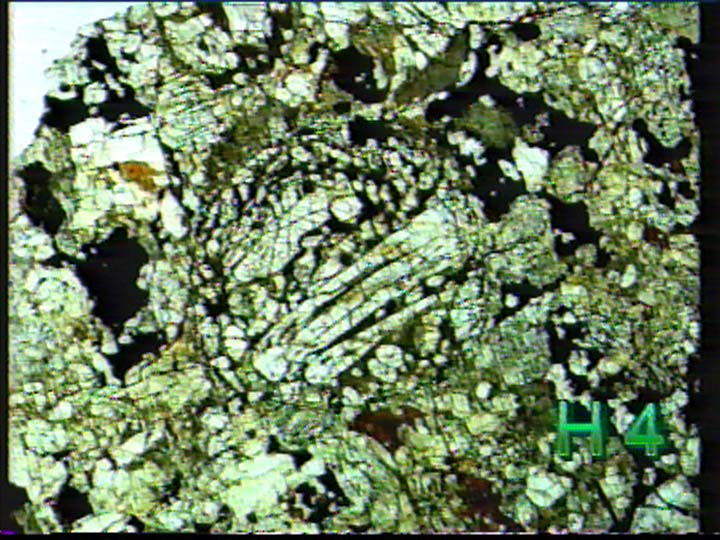
H4 matrix contains Carbon, Metal (Fe), SeS, and silicates with FeO. Between 3 and 4C (carbon) reduces some FeO: metal content increases. Equlibration results in more common FeO, MgO content in chondrules and matrix.
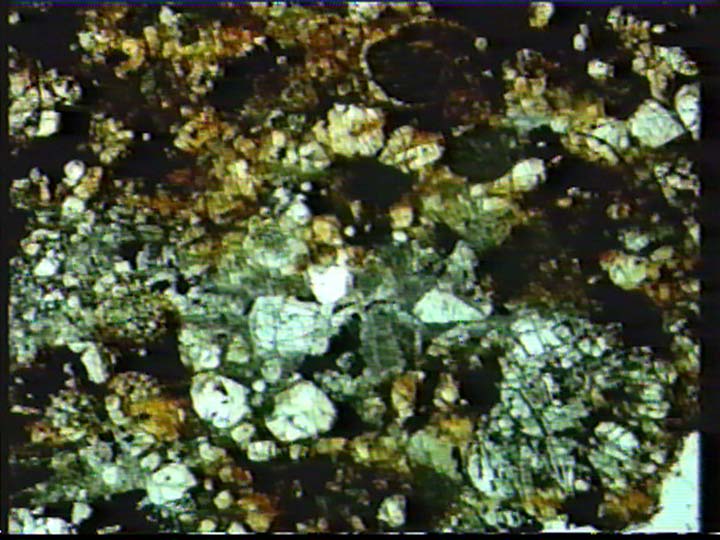
H5: Between 4 and 5 further obscuring of chondrule boundaries happens and change in iron grain size distribution.
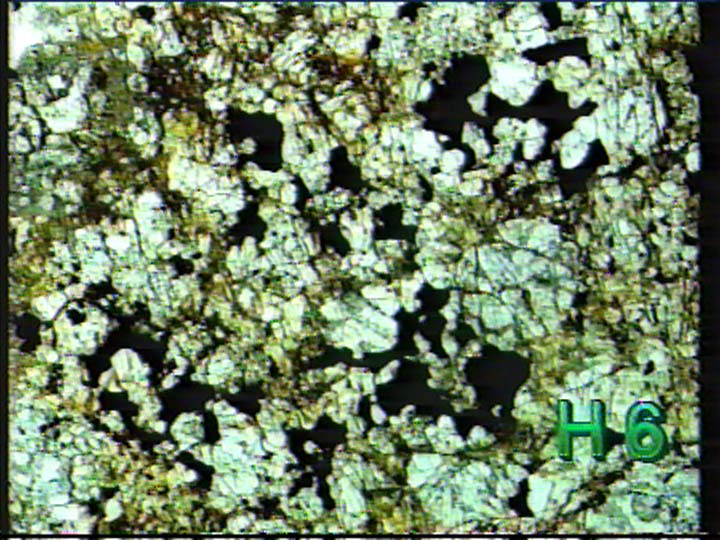
H6: 6. classes chondrules obscured, granular texture developed.
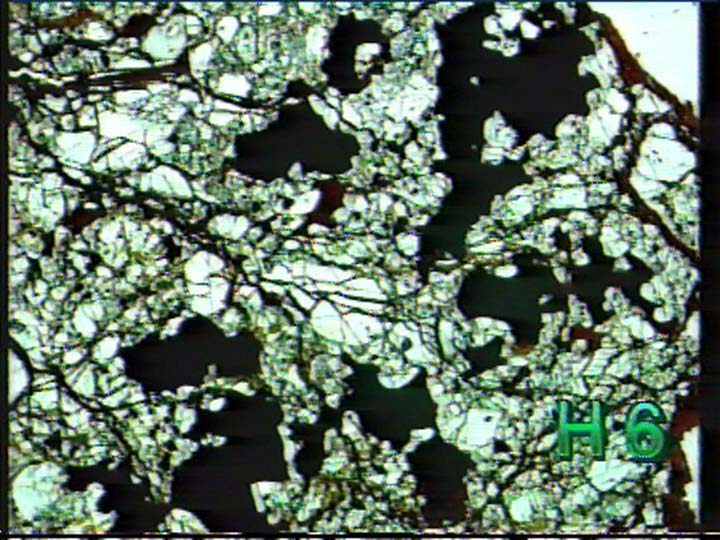
H6: Iron grains began too percolate in a later stage iron would flow out: we meet them as Pallasites.
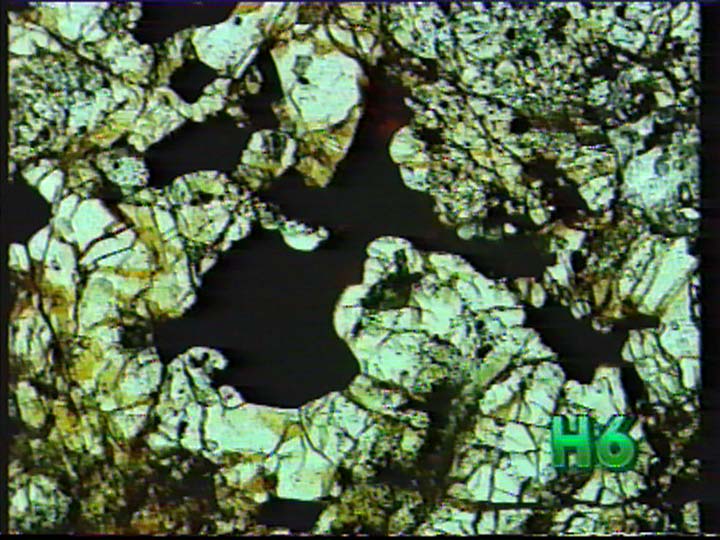
H6 Mesosiderite
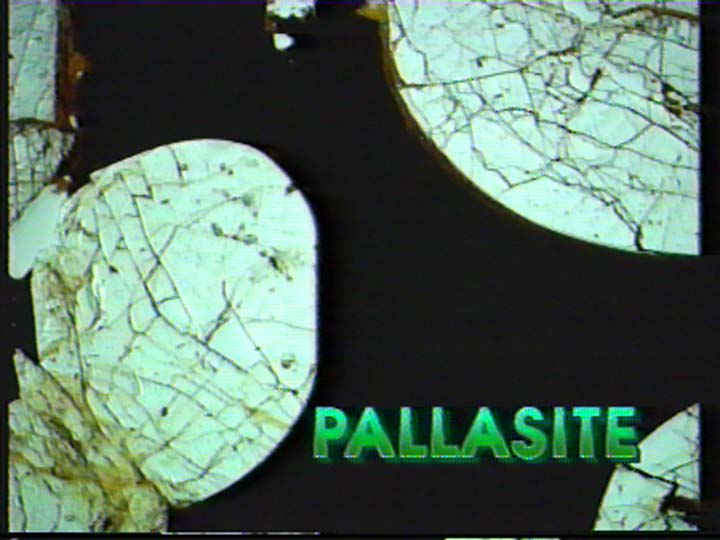
H6 Pallasite
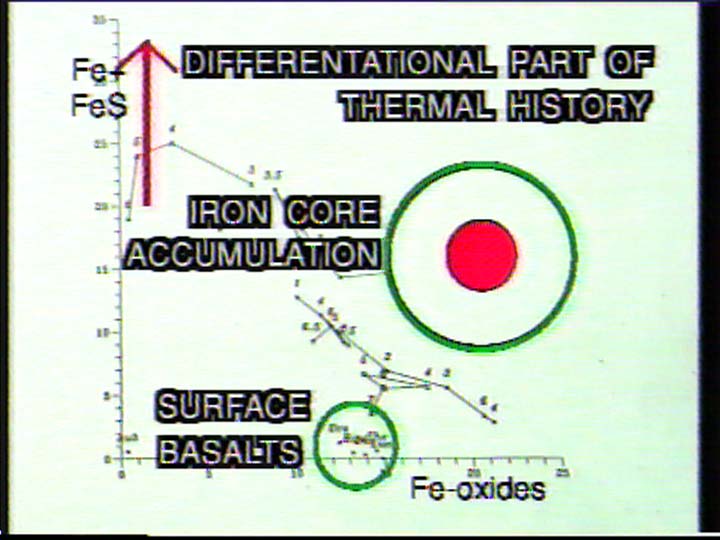
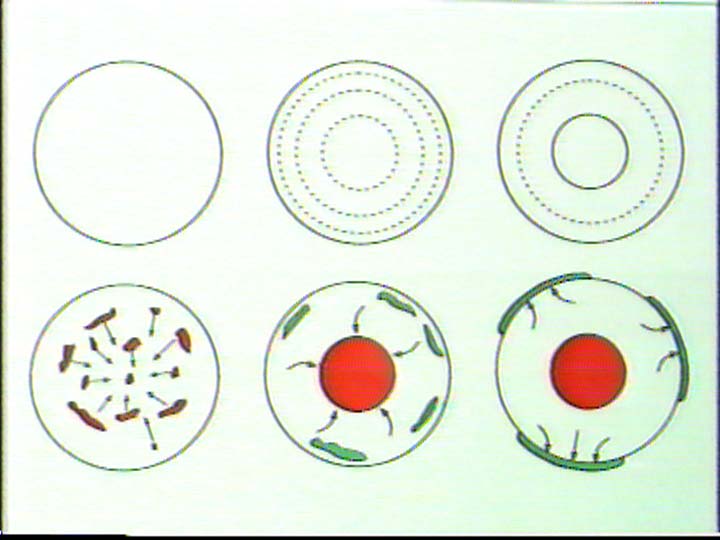
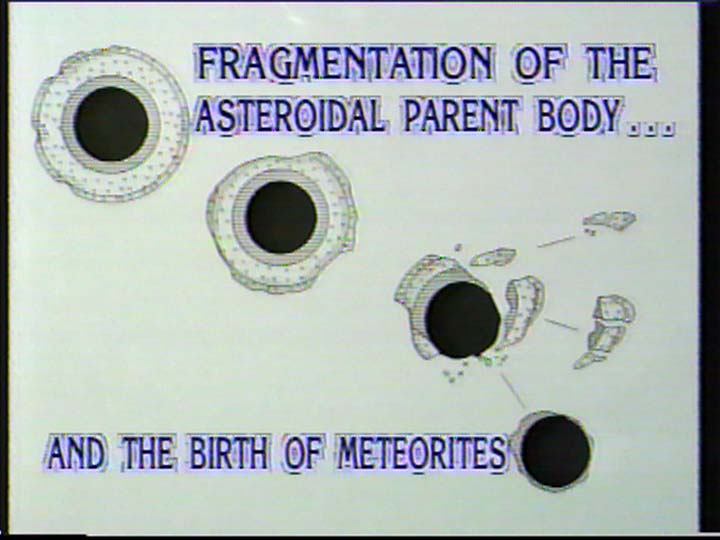
- Iron sank into the core
- Basaltic partial melts erupted to the surface
- Mantle rocks preserved most of primordial main silicates
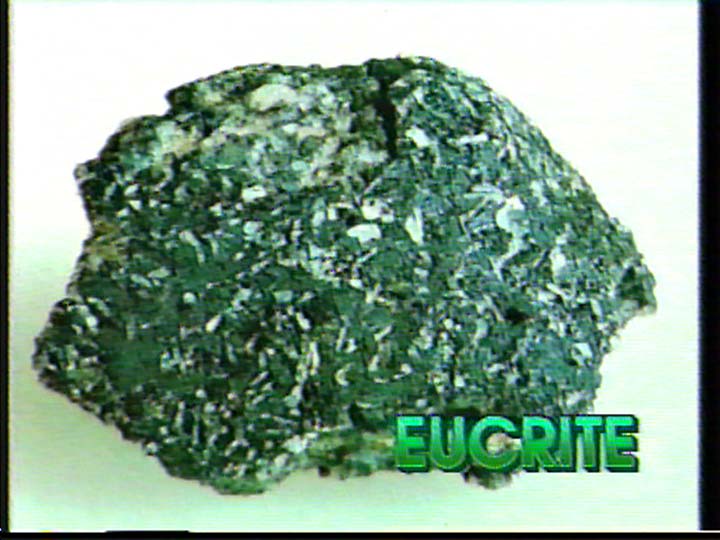
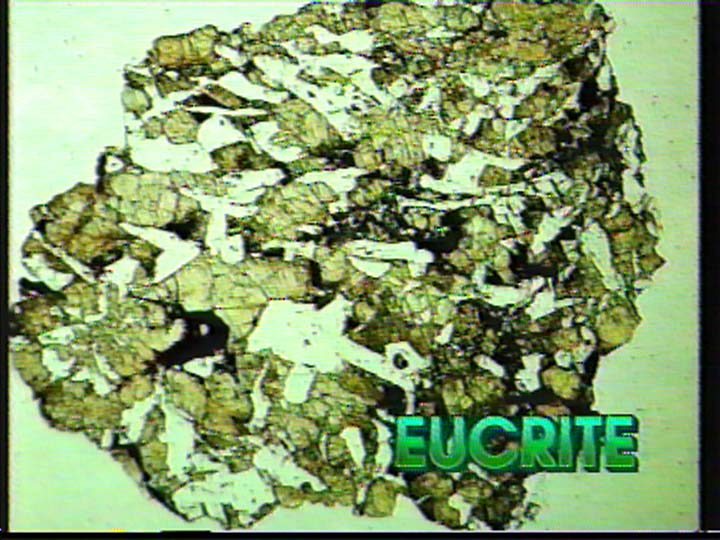
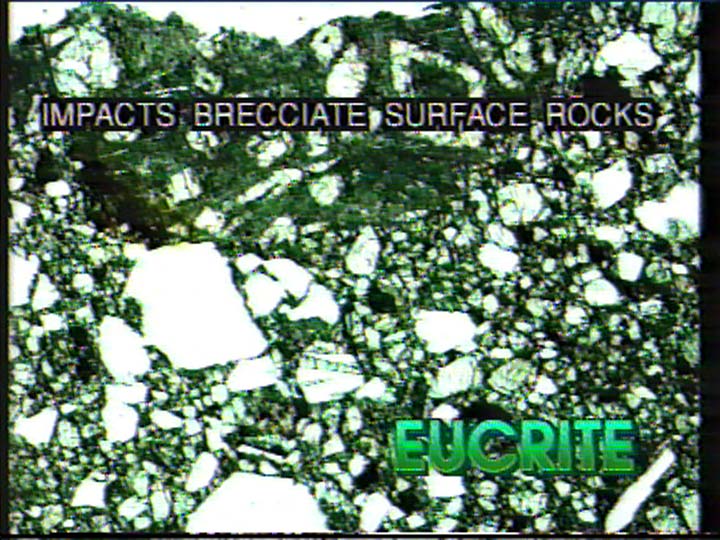
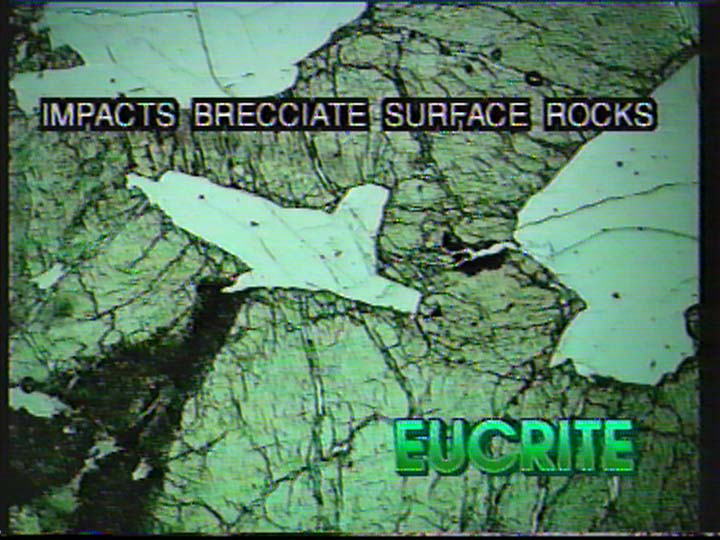
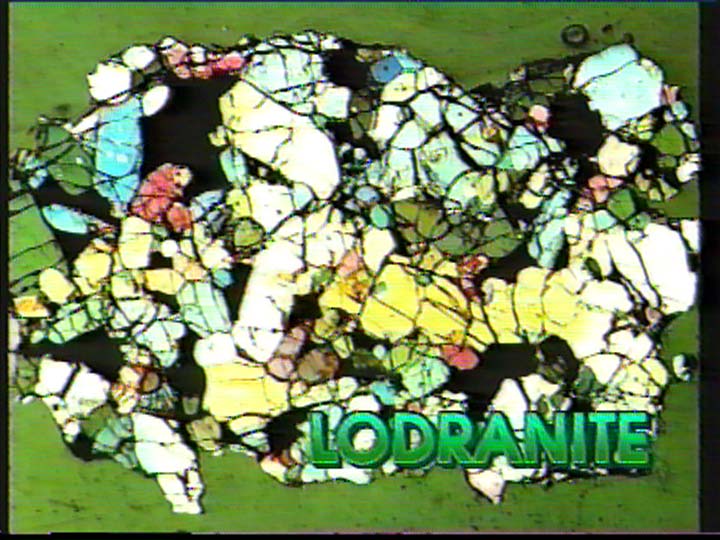
Parend body mantle rocks preserve the main silicate mineral constituents of the primordial chondrites: olivine and pyroxene.
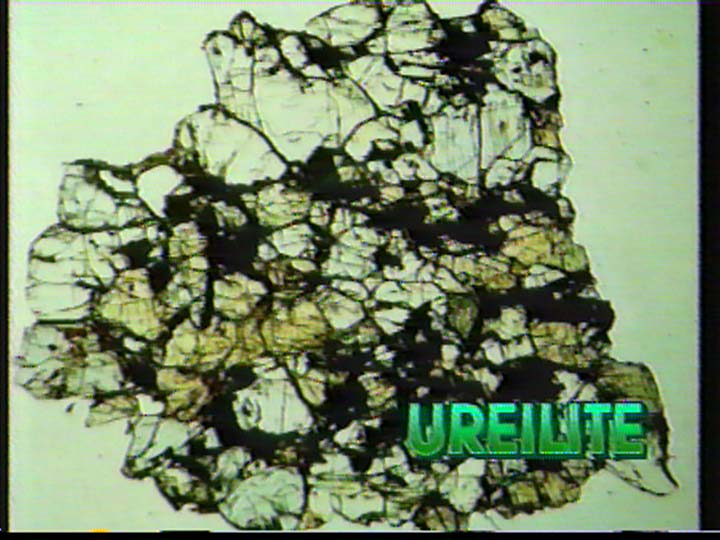
Urelites retained high carbon content which accumulated at grain boundaries. By diffusion it migrated into silicates and reduced some amount of their FeO to Fe metal.