Kereszturi, A., Sik, A., Bérczi, Sz., & Horváth, A. (2012). Comparison of possible recent water or brine related flow features on Mars. 43. LPSC, #1787, LPI, Houston.
Volatile-sphere research
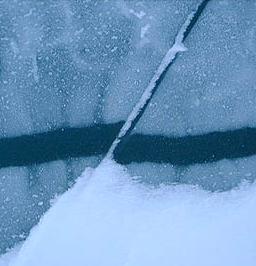
Ice and snow morphology
The planetary significance of Hungarian ice and snow morphology research lies in comparing lake ice with surface processes on Europa. We carried out this work during the first decade of the 2000s. Little ice formed on Lake Balaton afterwards, so the research was interrupted. If Lake Balaton freezes over again, we can collect enough data to use its ice in comparative planetary research.
Liquid Environments of the Solar System
The thirteenth volume of the series, originally published exclusively online, surveys liquid environments throughout the Solar System.
Liquids in the Solar System
The 2023 planetary-science volume by Szaniszló Bérczi, Henrik Hargitai, Emese Homolya, Erzsébet Illés, Ákos Kereszturi, Mária Mörtl, Bernadett Pál, András Sik, Péter Tasnádi and Tamás Weidinger.
Atlas of Planetary Atmospheres
An introduction to Solar System bodies that possess an atmosphere.
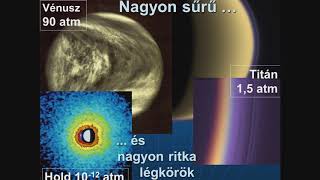 Volatile reservoirs in the Solar SystemDr Erzsébet Illés, 2020
Liquid spheres
Martian water, ice and brines
Bérczi, Sz., Horváth, A., Pócs, T., Sik, A., Szathmáry, E., & Kereszturi, Á. (2012). Targeting In-Situ Liquid Water Analysis with New Probes on Mars. Concepts and Approaches for Mars Exploration Symposium. #4131. LPI, Houston.
Kereszturi, A., Bérczi, Sz., Horváth, A., Pocs, T., Sik, A., & Szathmáry, E. (2011). Circumpolar water ice patches as possible microhabitats on Mars. EPSC-DPS2011-792. 6. European Planetary Science Congress, EPSC-DPS Joint Meeting 2011.
Kereszturi, A., Möhlmann, D., Berczi, Sz., Horvath, A., Sik, A., & Szathmary, E. (2011). Possible role of brines in the darkening and flow-like features on the Martian polar dunes based on HiRISE images. Planetary and Space Science, 59(13), 1413–1427. https://doi.org/10.1016/j.pss.2011.05.012
The paper examines darkening and flow-like changes on frost-covered Martian polar dunes. It evaluates whether short-lived salty liquid could explain some of them, without directly establishing that such liquid is present. Source
Kereszturi, A., Möhlmann, D., Berczi, Sz., Ganti, T., Horvath, A., Kuti, A., Sik, A., & Szathmary, E. (2010). Indications of brine related local seepage phenomena on the northern hemisphere of Mars. Icarus, 207(1), 149–164. https://doi.org/10.1016/j.icarus.2009.10.012
This study follows dark spots appearing on the seasonal frost of northern polar dunes on Mars. Their sizes and internal structures are used to explore whether small amounts of salty liquid might contribute to the observed changes. Source
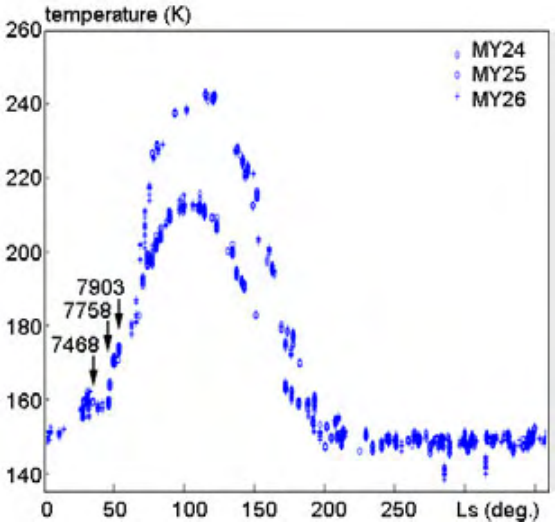
Kereszturi, A., Horvath, A., Sik, A., Kuti, A., Berczi, Sz., Ganti, T., Pocs, T., & Szathmary, E. (2009). Possible Liquid-Like Water Produced Seepage Features on Mars. Lunar and Planetary Science XXXX, Abstract #1111, Lunar and Planetary Institute, Houston (CD-ROM).
Kereszturi, A., Möhlmann, D., Berczi, Sz., Ganti, T., Kuti, A., Sik, A., & Horvath, A. (2009). Recent rheologic processes on dark polar dunes of Mars: Driven by interfacial water?. Icarus, 201(2), 492–503. https://doi.org/10.1016/j.icarus.2009.01.014
The paper examines dark, flow-like streaks that appear on southern polar dunes on Mars in spring. It proposes that very thin water films at grain–ice interfaces could assist movement, but this is a possible explanation rather than direct proof of liquid water. Source
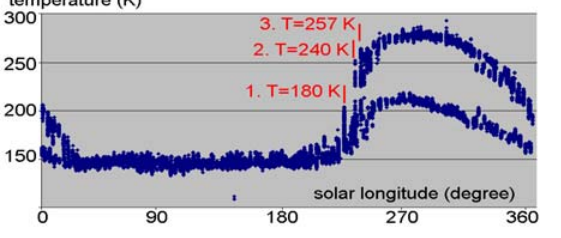
Kereszturi, A., Mohlmann, D., Bérczi, Sz., Horváth, A., Gánti, T., Kuti, A., Pócs, T., Sik, A., & Szathmáry, E. (2008). Analysis of possible interfacial water driven seepages on Mars. 39. LPSC. #1555.
Kereszturi, A., Berczi, Sz., Horvath, A., Ganti, T., Kuti, A., Pocs, T., Sik, A., & Szathmary, E. (2008). North-south comparison of springtime dark slope structures on Mars, and the possibility of liquid water. European Planetary Science Congress. Vol. 3, EPSC2008-A-00386.
Bérczi, Sz., Kereszturi, A., Möhlmann, D., Ganti, T., Horvath, A., Kuti, A., Pocs, T., Sik, A., & Szathmary, E. (2008). Seepage phenomena on Mars at subzero temperature. In 37th COSPAR Scientific Assembly (pp. 1497).
Liquid and ice systems on other planets
Bérczi, Sz., Hargitai, H., Homolya, E., Illés, E., Kereszturi, A., Mörtl, M., Sik, A., Tasnádi, P., & Weidinger, T. (2011). Liquids in the Solar System: New Concise Atlas in the Solar System Series of Textbooks at Eötvös University, Hungary. 42. LPSC, #1931, LPI, Houston.
Korzenszky, R., Bérczi, Sz., Hargitai, H., Kereszturi, Á., Hudoba, Gy., Hegyi, S., Pintér, A., Varga, T., Kabai, S., Nagy, Sz., & Gucsik, A. (2008). Comparison of the ice cover fissure systems of Jovian satellite Europa and frozen Lake Balaton, Hungary. 39. LPSC. #2284.
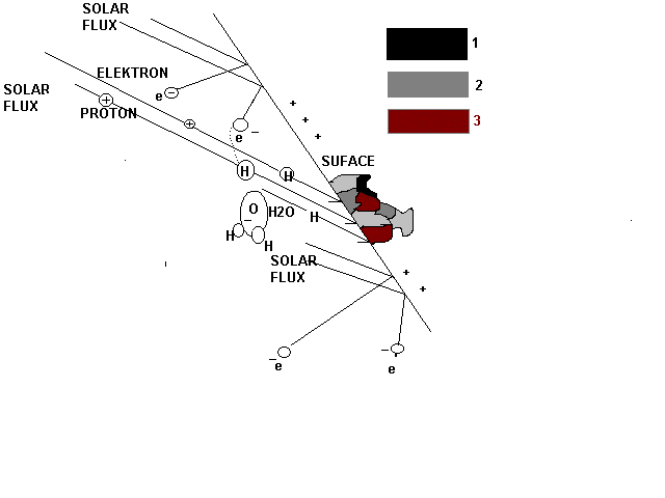
Földi, T., & Bérczi, Sz. (2001). The source of water molecules in the vicinity of the Moon. Lunar and Planetary Science XXXII, Abstract #1148, Lunar and Planetary Institute, Houston (CD-ROM).
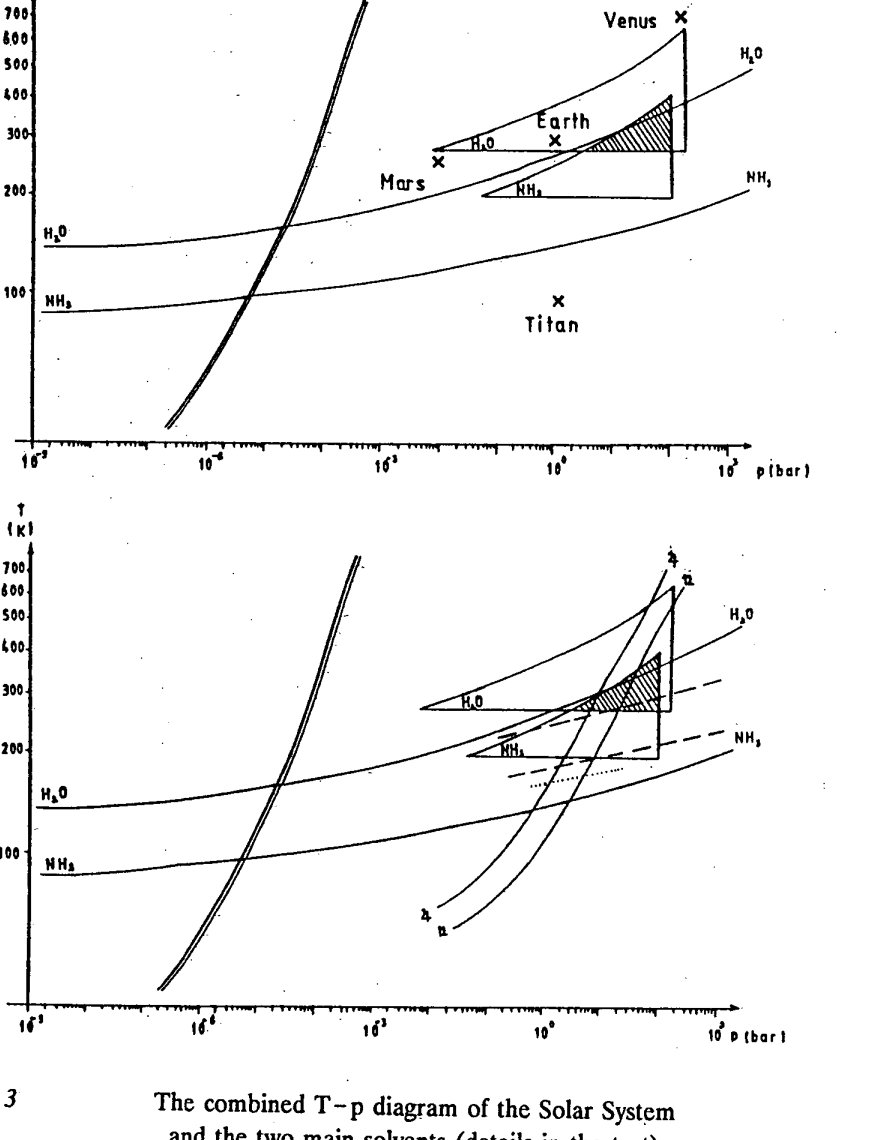
Bérczi, Sz., & Lukács, B. (1995). Solvent Liquids on Planets. Acta Climatologica, 28, 5–22.
Planetary surface fluid flows and phase transitions
Gánti, T., Horváth, A., Bérczi, Sz., Gesztesi, A., & Szathmáry, E. (2002). Defrosting and Melting, Not Defrosting Alone. Lunar and Planetary Science XXXIII, Abstract #1221, Lunar and Planetary Institute, Houston (CD-ROM).
Planetary atmospheres
Martian climate
Polgári, M., Gyollai, I., & Bérczi, Sz. (2021). Terraforming on Early Mars?. In M. Beech, J. Seckbach, & R. Gordon (Eds.), Terraforming Mars (pp. 161–279). John Wiley & Sons. https://doi.org/10.1002/9781119761990.ch10
This chapter examines how possible early Martian life might have left traces in rocks. It compares meteorites and spacecraft observations with rocks altered by microorganisms on Earth; these similarities alone do not establish that Mars hosted life. Source
Hargitai, H. I., Kereszturi, Á., Bérczi, Sz., Gucsik, A., & Nagy, Sz. (2008). Climate Based Analysis of Martian Surface Morphology. In 71. Met. Soc. Meeting (pp. 5219).

Hargitai, H., Bérczi, Sz., Nagy, Sz., Gucsik, A., & Kereszturi, Á. (2008). Mars climate diagram database. 39. LPSC, #1476.
Atmospheres and climates of other planets
Homolya, E., & Bérczi, Sz. (2010). Snowing” on Planets and in the Solar System. 33nd NIPR Symposium Antarctic Meteorites, Tokyo, p. 24-25.
Lukács, B., Bérczi, Sz., & Kereszturi, A. (2002). Brown Dwarfs' Atmospheres: Possible Analogy for Condensation in the Solar Nebula. Lunar and Planetary Science XXXIII, Abstract #1472, Lunar and Planetary Institute, Houston (CD-ROM).
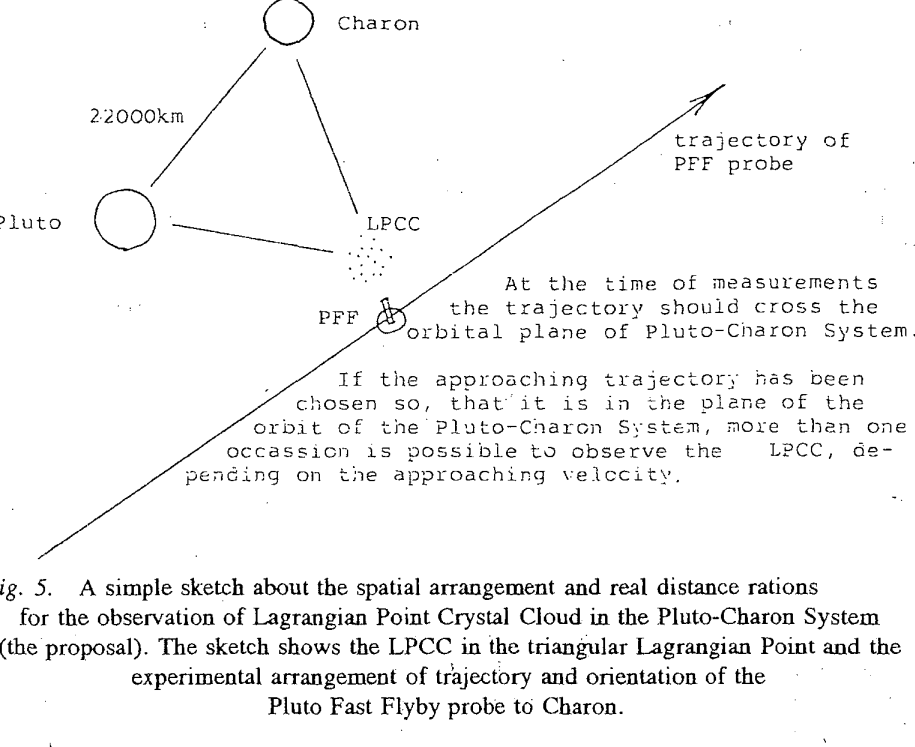
Bérczi, Sz. (1993). Preparations for the Measurements of Gas-Hydrate Crystal Clouds in the Outer Solar System. Acta Climatologica, 27, 5–16.
Bérczi, Sz. (1993). Short Summary about the Planetary Light Halo through Lagrangian Point Crystal Cloud (PLG-t-LPCC) Proposal to the Pluto Fast Flyby (PFF) Mision Observation. Notion of Intent to NASA Research Announcement 93-OSSA-5.
Atmospheric processes and surface-atmosphere interactions
Földi, T., & Bérczi, Sz. (2001). Quasiatmospheric Electrostatic Processes on Dusty Planetary Surfaces: Electrostatic Dust and Water molecule Coagulation and Transport to the Poles. 26th NIPR Symposium Antarctic Meteorites, Tokyo, p. 21-23.
Bérczi, Sz. (2001). Quasiatmospheric Electrostatic Processes on Dusty Planetary Surfaces: Electrostatic Dust and Water molecule Coagulation and Transport to the Poles [Presentation]. 26th NIPR Symposium Antarctic Meteorites, Tokyo, NIPR 2001 June 14, 11.45.
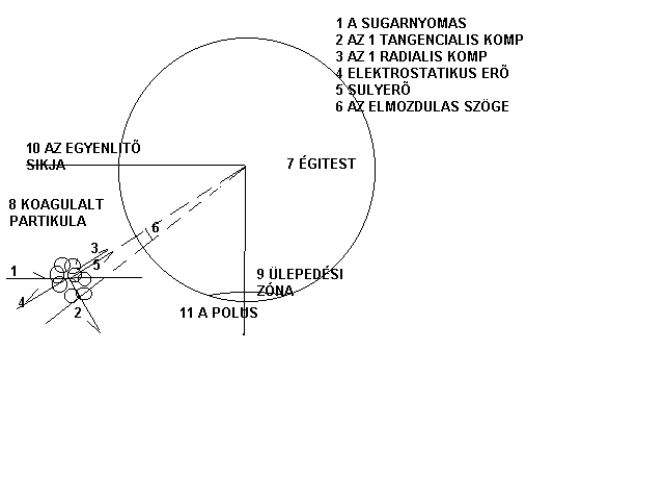
Földi, T., Bérczi, Sz., & Palásti, E. (2001). Water and bacteria transport via electrostatic coagulation and their accumulation at the poles on the dusty planet. Lunar and Planetary Science XXXII, Abstract #1059, Lunar and Planetary Institute, Houston (CD-ROM).
Further publications by topic
Further research
Bognar, A., Pal, B. D., & Kereszturi, A. (2026). Current water trapping micro-habitats on the surface of Mars. Icarus, 460, 117273. https://doi.org/10.1016/j.icarus.2026.117273
The authors propose a mechanism that might retain water absorbed at night inside cracks in Martian salts during the day. This is a model of hypothetical microscopic habitats, not evidence of persistent liquid water or life on Mars. Source
Gergacz, M., & Kereszturi, A. (2025). Survey of remnant seasonal ice patches at southern polar Mars. Icarus, 425, 116331. https://doi.org/10.1016/j.icarus.2024.116331
The researchers search high-resolution images for small ice patches left behind as the seasonal southern polar cap retreats on Mars. Often preserved in shaded places, their locations and persistence reveal how local conditions help retain ice. Source
Grace, R., Rácz, R. P., Kovács, S., Victoria, P., Geraint, M., Manish, P., Simon, S., Mifsud, D., Sulik, B., Biri, S., & Juhász, Z. (2025). Water-Group Ion Irradiation Studies of Enceladus Surface Analogues. EPSC-DPS Joint Meeting 2025, Helsinki, Finland, abstract #EPSC-DPS2025-264,.
Vass, B., Kadlecsik, Á., & Vincze, M. (2024). A Laboratory Model of the Large-Scale Atmospheric Circulation of Tidally Locked Exoplanets. Atmosphere, 15(8), 982. https://doi.org/10.3390/atmos15080982
A rotating fluid experiment models atmospheric circulation on an exoplanet that always faces its star with the same side. Uneven heating representing permanent day and night sides is used to investigate the large-scale flows that can develop. Source
Ricardo, C., Alexis, B., Grégoire, D., Jennifer, N., Herczku, P., Juhász, Z., Sulik, B., Rajta, I., Vajda, I. K., & Lakatos, G. (2024). Irradiation of CH3OH ices with a sulfur ion beam: implications for Europa’s surface organics. EPSC, abstract #367.
Pál, B. D., & Kereszturi, Á. (2022). Deliquescence probability maps of Mars and key limiting factors using GCM model calculations. Icarus, 376, 114856. https://doi.org/10.1016/j.icarus.2021.114856
This paper maps where and when conditions might allow tiny amounts of salty liquid to form on Mars. Atmospheric models identify promising evening periods in parts of the northern hemisphere, but humidity and temperature strongly restrict this possibility. Source
Pál, Bernadett (2022). Potential Deliquescence at the ExoMars Rosalind Franklin Rover Landing Site. LPSC, abstract #2006.
Pál, Bernadett (2021). Global Deliquescence Possibility on Present Day Mars from Model Calculations. LPSC, abstract #1864.
Deutsch, A., Chabot, N., Maiti, A., Luspay-Kuti, A., Kereszturi, A., Lucchetti, A., Virkki, A., Colaprete, A., Vorburger, A., Byron, B., Jones, B., Anzures, B., Butler, B., Schmidt, C., Ernst, C., Grava, C., Klimczak, C., Dong, C., Hamill, C., …, Farrell, W. (2021). Science Opportunities offered by Mercury’s Ice-Bearing Polar Deposits. Bulletin of The American Astronomical Society, 53(4), 069. https://doi.org/10.3847/25c2cfeb.98885a8e
This proposal summarizes opportunities to study ice deposits in Mercury's shadowed polar regions. Ice and associated volatile materials could reveal how water reached the inner Solar System and how it has been retained there. Source
Pál, B., & Kereszturi, Á. (2021). Trends and key limiting factors of calcium perchlorate deliquescence on the surface of Mars. EPSC, abstract #EPSC2021-162.
Martian climate data are used to calculate when a perchlorate salt could absorb enough moisture to form brine. The study examines temperature and humidity limitations; favorable modeled conditions are not a direct observation of liquid. Source
Pál, B., & Kereszturi, Á. (2020). Annual and daily ideal periods for deliquescence at the landing site of InSight based on GCM model calculations. Icarus, 340, 113639. https://doi.org/10.1016/j.icarus.2020.113639
Atmospheric modelling is used to find when salts could absorb enough water vapour to form liquid at the InSight landing site. The calculations suggest only short favourable evening periods, with temperature acting as a crucial constraint. Source
Pál, Bernadett (2019). Global Distribution of Near-surface Relative Humidity Levels on Mars. LPSC, abstract #no. 2132.
Pál, B., Kereszturi, Á., & Francois, F. (2018). Seasonal changes of near-surface relative humidity on Mars. EPSC, abstract #Vol. 12, EPSC2018-51, 2018.
Marschall, M., Hilyakiné, K. M., Gyollai, I., Józsa, S., & Kereszturi, Á. (2015). Basalt Weathering Experiment in Sulfuric Acid Brine to Better Understand Martian Mineral Alterations. LPSC, abstract #1333.pdf.
Pál, B., & Kereszturi, Á. (2015). Evaluation of Liquid Brine Appearance at ExoMars Rover's Candidate Landing Sites. LPSC, abstract #1796.
Kereszturi, Á., Bérczi, S., Horváth, A., Pócs, T., Sik, A., & Szathmáry, E. (2012). Circumpolar water ice patches as possible microhabitats on Mars. EPSC, abstract #405.
Futó, Péter (2012). Coreless water ice planets.. LPSC, abstract #1293.
Farkas, Alexandra (2010). Possible extraterrestrial halo displays - a review. EPSC, abstract #Vol. 5, EPSC2010-2.
Kereszturi, Á., Vincendon, M., & Schmidt, F. (2010). Water ice patches in Richardson crater, Mars. EPSC, abstract #EPSC2010-629.
Kereszturi, A. (2003). The role of subsurface melting in the global climate cycles on Mars. 34th Lunar and Planetary Science Conference (Abstract No. 1533). Lunar and Planetary Institute.
Mizser, A., & Kereszturi, A. (2002). Approach of oceanic current directions inside Europa. 33rd Lunar and Planetary Science Conference (Abstract No. 1227). Lunar and Planetary Institute.