Bérczi, Sz., Józsa, S., Szakmány, Gy., Gucsik, A., Hargitai, H., Kereszturi, A., & Nagy, Sz. (2008). Studies of Solar System cumulate rocks from NASA Lunar set and NIPR Martian meteorites. European Planetary Science Congress. Vol. 3, EPSC2008-A-00272.
Lunar rocks
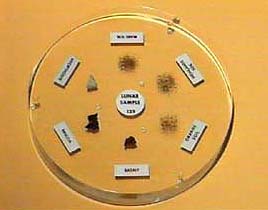
Since 1994, NASA lunar samples have been loaned to Hungary for university education. The original account describes the fifth loan period. The educational set prepared at the Johnson Space Center contains twelve thin sections representing the main lunar rock types and their formation processes.
The four main material groups are highland rocks, mare basalts, breccias and soils. Anorthosite sample 60025 consists mainly of feldspar crystals fractured by impacts. Breccias record repeated fragmentation, transport and heating; sample 14305 includes breccia within breccia.
Three basalt thin sections and the orange soil sample represent volcanic materials. The orange soil consists of rapidly solidified glass droplets, 60–100 micrometres across, produced by lava fountains. Their composition preserves information about the lunar mantle source. Soil samples contain transported rock and mineral fragments and reveal surface mixing.
Studying these samples as sequences of material structures and transformations connects subjects and encourages students to explore material science. This approach emphasizes shared analytical methods rather than treating each school subject in isolation.
Bérczi Szaniszló, ELTE Cosmic Materials Space Research Group.
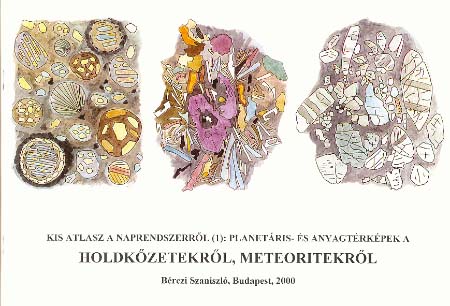
Lunar Rocks and Meteorites
An introduction to the material analysis of lunar rocks and meteorites found on Earth, and to the evolution of small Solar System bodies.
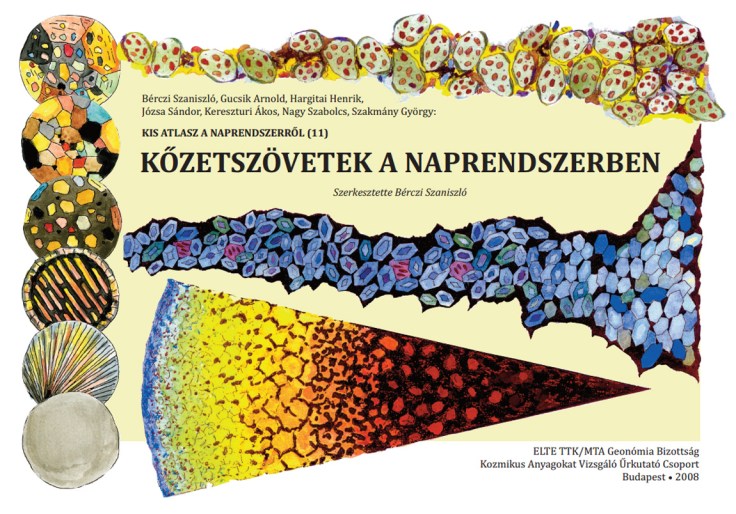
Rock Fabrics in the Solar System
Rock fabrics across the Solar System, presented through thin sections of lunar, Martian and terrestrial rocks.
 Studies of NASA lunar samplesSzaniszló Bérczi
Cosmic material studies in education
Lunar rocks
NASA sample collection
Bérczi, Sz. (2004). NASA Lunar Sample Studies. In Space Activities in Hungary 2002-2003 (pp. 2002–2003). Hungarian Space Office.