Berczi, S., Gucsik, A., Hargitai, H., Kereszturi, A., & Nagy, S. Z. (2008). Concise atlas of the solar system (11): Comparison of the petrographic textures and evolutionary processes in the parent bodies. Meteoritics & Planetary Science, 43(7), A23.
Evolution of matter
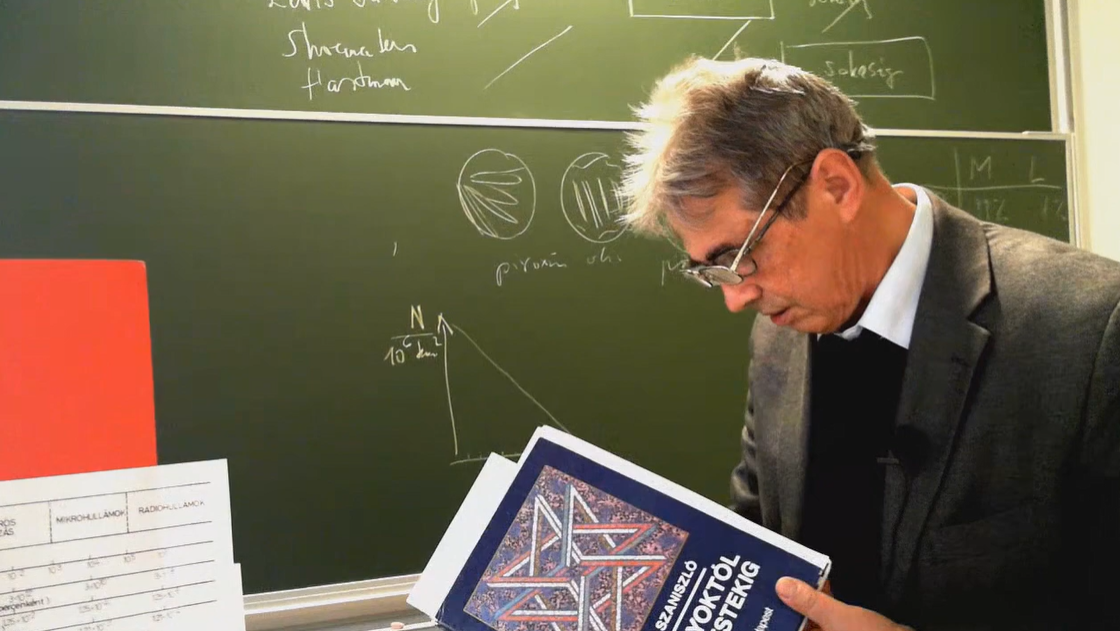 Evolutionary history of the Solar SystemSzaniszló Bérczi
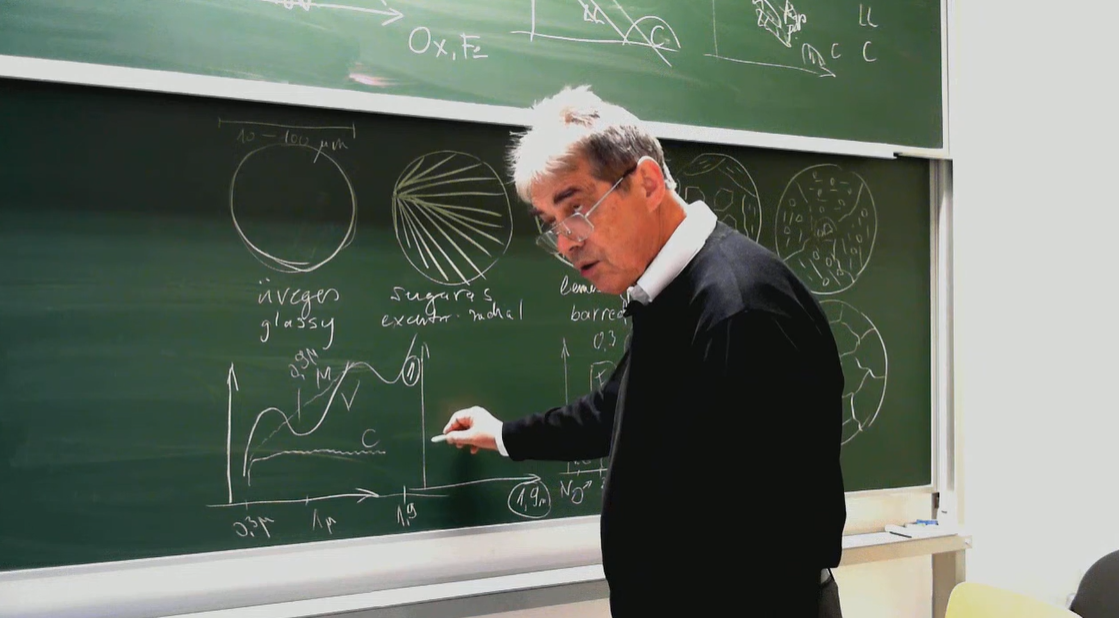 Meteorite studies and the evolutionary history of a small celestial bodySzaniszló Bérczi, 2020
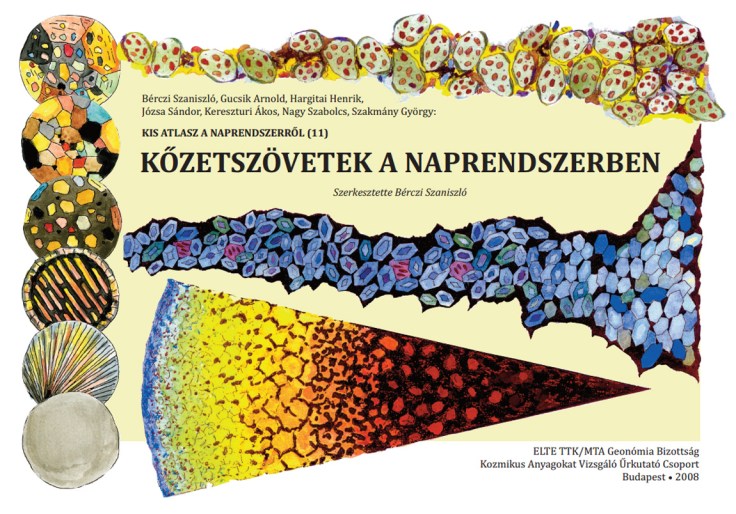
Rock Fabrics in the Solar System
Rock fabrics across the Solar System, presented through thin sections of lunar, Martian and terrestrial rocks.
Planetary surface and interior materials
Planetary materials and mineralogy
Bérczi, Sz., Gucsik, A., Hargitai, H., Kereszturi, A., & Nagy, Sz. (2008). Concise Atlas of the Solar System (11): Comparison of the Petrographic Textures and Evolutionary Processes in the Parent Bodies. In 71st Annual Meteoritical Society Meeting (Abstract 5163).
Berczi, Sz., Jozsa, S., Szakmany, Gy., Nagy, Sz., Gucsik, A., Kereszturi, A., Hargitai, H., Hegyi, S., & Hudoba, Gy. (2008). Recognition of planetary cumulate rock types for rover cameras. Meteoritics & Planetary Science, 43(7), A179.
Gucsik, A., Nishido, H., Ninagawa, K., Okumura, T., Bérczi, Sz., Kereszturi, Á., Hargitai, H., Polgári, M., & Nagy, Sz. (2006). Cathodoluminescence and its application in the planetary sciences: a review. XXXVII LPSC, #1543, LPI, Houston.
Mörtl, M., Homonnay, Z., Lukács, B., Weidinger, T., & Bérczi, Sz. (2006). Planetary science and chemistry: new concise atlas in the Solar System series of textbooks at Eötvös University, Hungary. XXXVII LPSC, #1618, LPI, Houston.
Gucsik, A., Bérczi, Sz., Kereszturi, Á., Hargitai, H., & Nagy, Sz. (2006). Shock metamorphism of zircon in nature and experiment: a review. XXXVII LPSC, #1544, LPI, Houston.
Bérczi, Sz. (2005). Extraterrestrial Materials of the Solar system. In E. Dudich (Ed.), Geonomy: The synthesizing geoscience for the 21st century (pp. 37–42). MTA–UNICONSTANT.
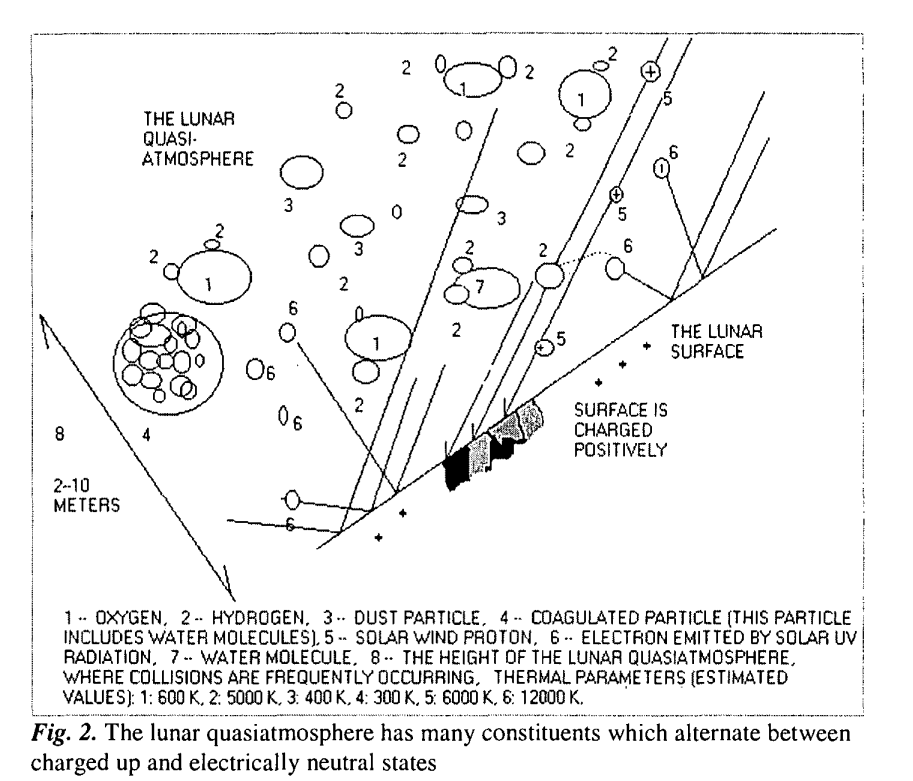
Földi, T., & Bérczi, Sz. (2002). Electrostatic Modelling of the Lunar Soil - How Electrostatic Processes in the Lunar Dust May Generate the Ion-Cloud Levitating above the Surface on the Moon - Experiments in a Model Instrument. Acta Mineralogica et Petrographica, 43, 55–58.
Földi, T., Bérczi, Sz., Ezer, R., Palásthi, E., & Hegyi, S. (2002). Measuring Electrostatic Processes in the Dust: Modelling the Lunar Dust and Solar Radiation Interaction which Generates a Levitating Electrically Charged Dust Cloud above the Surface of the Moon. 27th NIPR Symposium Antarctic Meteorites, Tokyo, p. 27-28.
Bérczi, Sz., Maros, G., Szabó Soki, L., & Varga, T. (2001). Lecture on Solar System Materials [Film or screenplay]. 60 min. videofilm made for the 33rd LPSC, NASA-LPI, Houston, Texas, 2002, March 4-8.
Bérczi, Sz., Brezsnyánszky, K., Detre, Cs., Ditrói-Puskás, Z., Fáy, N., Holba, Á., Józsa, S., Kubovics, I., Lukács, B., Szakmány, Gy., & Tóth, I. (1997). High titanium basalts in the Solar System. (22th Symp. Antarctic Meteorites, Tokyo, NIPR) p.9.
Berczi, Sz., & Lukács, B. (1996). On Contacts of High and Low Ti Basalts on the Moon. Kfki Report, 08/C, 1–23.
Bérczi, Sz. (1979). Double crystallization in the Solar System [Presentation]. INTERCOSMOS Conference. Varsó.
Bérczi, Sz. (1978). Planetology and cosmopetrography [Presentation]. Babes-Bolyai University, Fac. of Mathematics and Physics. 1978 December. 18.
Internal structure and structural hierarchy
Bérczi, Sz. (2017). Planning Science Experiments According to the Multihierarchical Structural System of Planetary Objects. Planetary Science Vision 2050 Conference, Washington D.C. #8003.
Bérczi, Sz., & Kabai, S. (2012). Quasicrystals and Structural Hierarchy: Model Structures for Probable Metallic Impact Materials. 35th Symposium on Antarctic Meteorites. Tokyo, 2012, nov. 28-29.
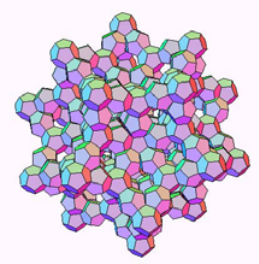
Kabai, S., & Bérczi, Sz. (2004). Modelling planetary material’s structures: from quasicrystalline microstructure to crystallographic materials by use of Mathematica. 35th LPSC, #1081, LPI, Houston.
Horváth, A., & Bérczi, Sz. (2003). Proposals for Mars Express and Nozomi missions how to determine the layered structure of Phobos. In Lunar and planetary science (Abstract 1131). Lunar and Planetary Institute.
Bérczi, Sz. (2001). Indicating the deep structure (below the icy and liquid layers) of Europa and Titan by measurements with a giant solenoid system on board of an orbiting space probe. Forum on Innovative Approaches to Outer Planetary Exploration 2001–2020, (Organized by NASA Headquarters and LPI. In LPI Contribution No. 1084. p. 28. Abstract #4025) Houston, Lunar and Planetary Institute, 2001 February 21. 16.45.
Földi, T., & Bérczi, Sz. (2001). Indicating the deep structure (below the icy and liquid layers) of Europa and Titan by measurements with a giant solenoid system on board of an orbiting space probe. In Forum on Innovative Approaches to Outer Planetary Exploration 2001–2020, p. 28. LPI Contribution No. 1084. Lunar and Planetary Institute, Houston.
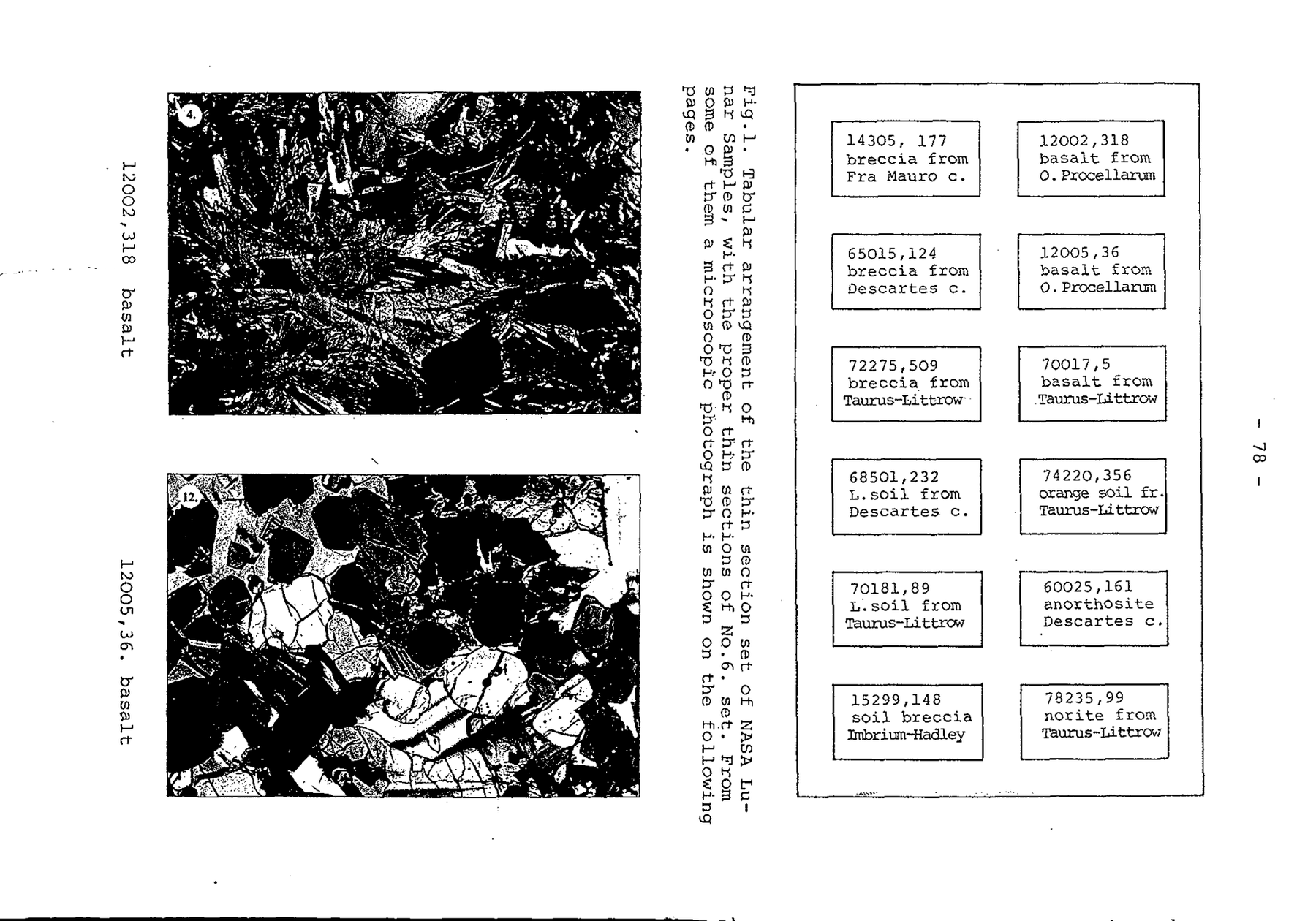
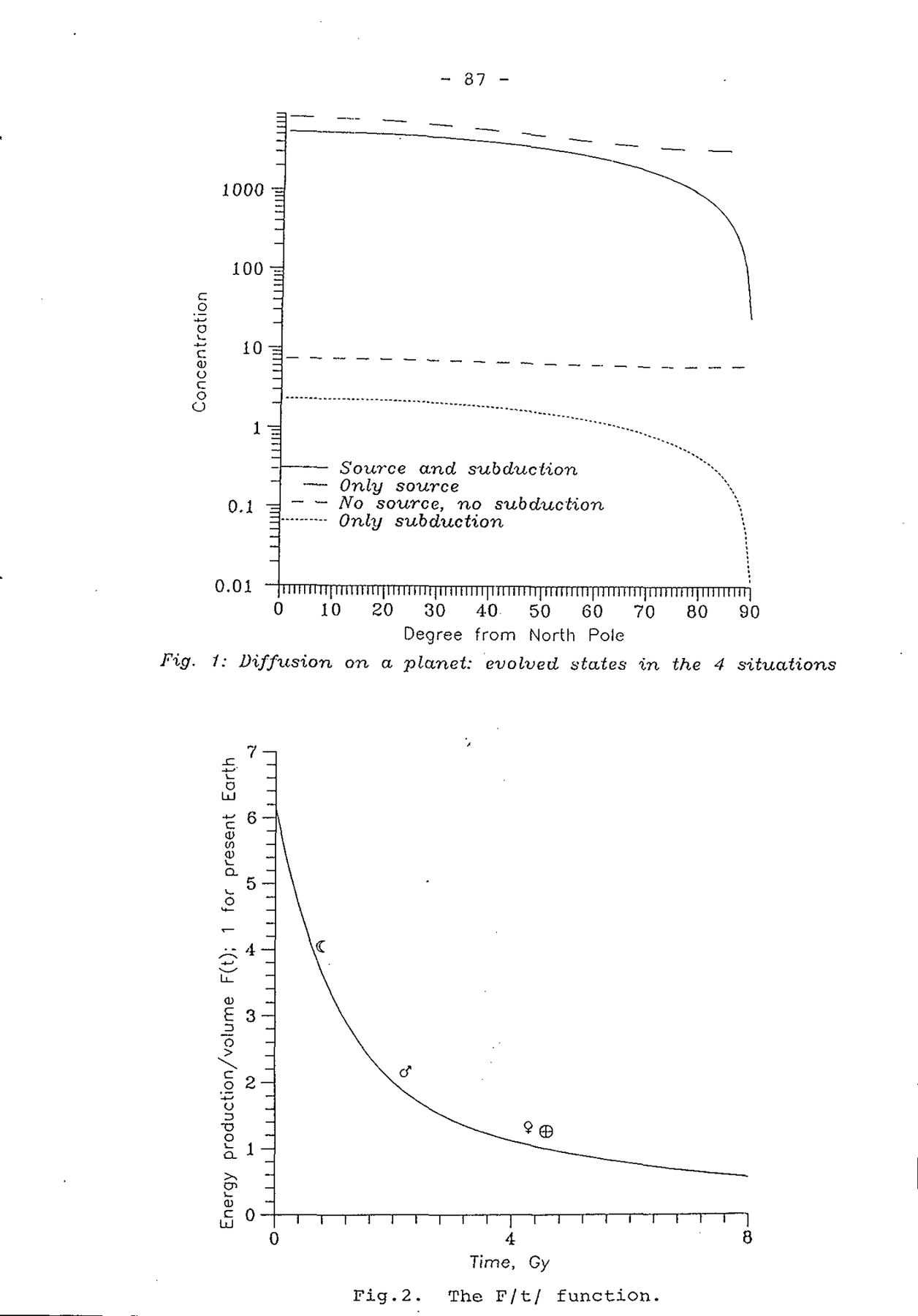
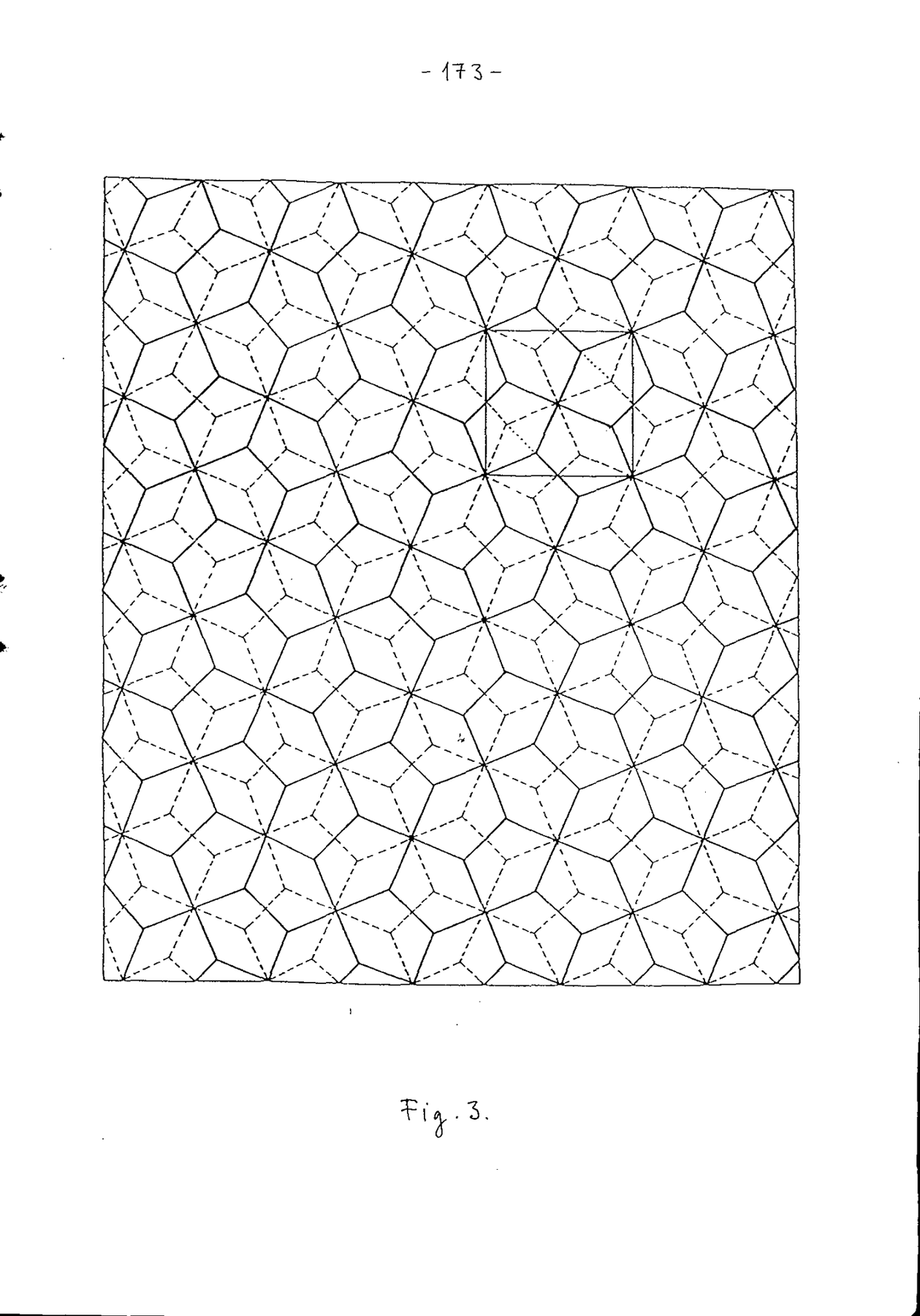
Lukács, B., Kubovics, I., Stegena, L., & Bérczi, Sz. (Eds.) (1994). Evolution of Extraterrestrial Materials and Structures. (Ed. Volume of Vth Symposium.) MTA-KFKI-1994-22/C. Budapest.Full text (ResearchGate)
Bérczi, Sz. (1990). Solar System Evolution: Crystals and Planetary Bodies. In B. Lukács, Sz. Bérczi, I. Molnár, & Gy. Paál (Eds.), Evolution: From cosmogenesis to biogenesis (MTA-KFKI-1990-50/C; pp. 37–43). MTA Központi Fizikai Kutatóintézet.
General geology, mineralogy and evolution of matter
Terrestrial petrology, mineralogy and ore formation
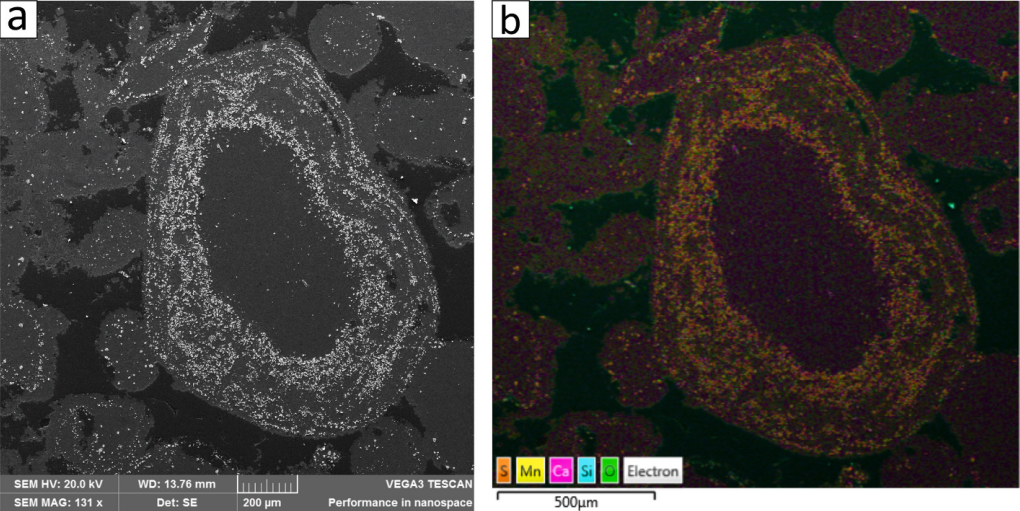
Madondo, J., Gyollai, I., Fintor, K., Szabó, M., Bérczi, Sz., Partida, E. G., Canet, C., Chacon, E., Mishra, S., & Polgári, M. (2025). Microbial mediation on the development of the Molango manganese ore Deposits, Mexico. Ore Geology Reviews, 185, 106782. https://doi.org/10.1016/j.oregeorev.2025.106782Publisher / online source · Publisher / online source · Publisher / online source
The study investigates the role of microorganisms in forming manganese ores at Molango in Mexico. Mineral textures and isotope evidence together support microbial involvement in ore formation. Source
Bérczi, Sz. (2005). Formation of the Mineral belts around the Sun. In E. Dudich (Ed.), Geonomy: The synthesizing geoscience for the 21st century (pp. 15–17). MTA–UNICONSTANT.
Bérczi, Sz., & Török, K. (1993). Liesegang Layering in Spx-33 Clinopyroxene Magacryst. In B. Lukács, Sz. Bérczi, & K. Török (Eds.), Carpathian Basin: Evolutionary stages (MTA-KFKI-1993-21/C; pp. 33–37). MTA Központi Fizikai Kutatóintézet.
Bérczi, Sz., & Török, K. (1992). The Second Liesegang-Layered Clinopyroxene Megacryst Inclusion from Szentbékkálla, Balaton-Highlands, Hungary. In 29th International Geological Congress, Vol. 3 (pp. 706).
Bérczi, Sz. (1989). Peridotite Inclusions in Basalts of Persányi Mts. 28th International Geological Congress, Washington D.C. 1-130. (1989).
Bérczi, Sz. (1989). Peridotite Inclusions in Basalts of Persányi Mts [Presentation]. 28th International Geological Congress, Washington D.C. 1989 July 17. 2.55 p.m.
Bérczi, Sz., & Szabó, Cs. (1989). Spx-3. Liesegang Layered Clinopyroxene Megacryst Inclusion from Szentbékkálla, Hungary. Acta Mineralogica et Petrographica, 30, 5–17.
Bérczi, Sz., & Szabó, Cs. (1989). Uniformly Multilayered Clinopyroxene Megacryst Inclusion from Szentbékálla, Hungary. 28th International Geological Congress, Washington D.C. 1-131.
Bérczi, Sz. (1989). Uniformly Multilayered Clinopyroxene Megacryst Inclusion from Szentbékálla, Hungary [Presentation]. 28th International Geological Congress, Washington D.C. 1998 July, 18. 3.45 p.m.
Bérczi, Sz. (1988). Proofs for the existence of Anorthite-Spinel-Garnet Peridotite Series of Inclusions in Basalts of the Persányi Mountains, Transylvania, Roumania. Acta Mineralogica et Petrographica, 29, 139–143.
Bérczi, Sz., & Bérczi, J. (1986). REE Content in the Szentbékkálla Series of Peridotite Inclusions. Acta Mineralogica et Petrologica Szeged, 28, 61–74.
Bérczi, Sz., & Bérczi, J. (1984). REE Concentrations in Peridotite Inclusions, Their Mineral Separates and Host Alkali Basalts from NW Balaton Region, Hungary (1984). 27th International Geological Congress, Moszkva, 1984.aug. 4-21.
Bérczi, Sz. (1984). REE Content in the Szentbékkálla Series of Peridotite Inclusions [Presentation]. 27th International Geological Congress, Moszkva. 1984 August 7.
Crystal structures and geometric material models
Kabai, S., & Bérczi, Sz. (2011). Tetrahedral contructions. MATEP Konf. Pécs, 2011, May, 26-28.
Bérczi, Sz., & Kabai, S. (2006). From Quasicrystalline Microstructure to Crystallographic Materials: Modelling Material’s Structures by Use of Mathematica. In Symmetry Festival 2006 (pp. conf-BSZ).
Material evolution and structural hierarchy
Lukács, B., & Bérczi, Sz. (Eds.) (1998). Side Tracks in Evolution. MTA-KFKI-07/C. Budapest.
Lukács, B., Kubovics, I., Stegena, L., & Bérczi, Sz. (Eds.) (1995). Trialities in Evolution. (Ed. Volume VIth Symposium.) MTA-KFKI-21/C. Budapest.
Bérczi, Sz. (1994). Connected organizational levels in the Evolution of Matter [Presentation]. KATACHI U SYMMETRY, (sess. 5.) November 22, 1994 on the University of Tsukuba, in Tsukuba, Japan.
Bérczi, Sz., Holba, Á., & Lukács, B. (1994). On a Possible Way of Plant Evolution. In B. Lukács, I. Kubovics, L. Stegena, & Sz. Bérczi (Eds.), Evolution of extraterrestrial materials and structures (MTA-KFKI-1994-22/C; pp. 147–165). MTA Központi Fizikai Kutatóintézet.
Lukács, B., Bérczi, Sz., & Török, K. (Eds.) (1993). Carpathian Basin: Evolutionary Stages. (p.100.) MTA-KFKI-1993-21/C. Budapest.
Bérczi, Sz. (1992). Connected Organizational Levels in the Evolution of Matter. In B. Lukács, Sz. Bérczi, E. Lábos, & I. Molnár (Eds.), Mutual dynamics of organizational levels in evolution (MTA-KFKI-1992-32/C; pp. 9–10). MTA Központi Fizikai Kutatóintézet.
Bérczi, Sz. (1992). Geological Principles in Evolution of Matter in the Universe. 29th International Geological Congress, Kyoto, Japan, Vol. 3 of 3, p. 992.
Lukács, B., Bérczi, Sz., Lábos, E., & Molnár, I. (Eds.) (1992). Mutual Dynamics of Organizational Levels in Evolution. (p. 137). MTA-KFKI-1992-32/C. Budapest. (Szerk.).
Bérczi, Sz., & Lukács, B. (1990). Evolution of the Terrestrial Atmosphere. In B. Lukács, Sz. Bérczi, I. Molnár, & Gy. Paál (Eds.), Evolution: From cosmogenesis to biogenesis (MTA-KFKI-1990-50/C; p. 68). MTA Központi Fizikai Kutatóintézet.
History of science and technology
Bérczi, Sz., & Lukács, B. (1999). Stephen G. Brush A History of Modern Planetary Physics, I., II, III. (Cambridge University Press, 1996), (Book review). Acta Scientiarum Mathematicarum, 61(1999).
Materials technology and general scientific synthesis
Polgári, M., Bérczi, Sz., Horiuchi, K., Matsuzaki, H., Kovács, T., Józsa, S., Bendő, Z., Fintor, K., Fekete, J., Homonnay, Z., Kuzmann, E., Gucsik, A., Gyollai, I., Kovács, J., & Dódony, I. (2017). Characterization and 10 Be content of iron carbonate concretions for genetic aspects – Weathering, desert varnish or burning: Rim effects in iron carbonate concretions. Journal of Environmental Radioactivity, 173, 58–69. https://doi.org/10.1016/j.jenvrad.2016.11.005
Mineral, chemical and isotope analyses are used to investigate three iron-carbonate concretions from Hungary. Some observations do not fit standard formation explanations, but the results are insufficient to establish the proposed meteorite origin. Source
Ninagawa, K., Yamaguchi, Y., Nishido, H., Kawano, S., Nomura, R., Gucsik, A., & Bérczi, Sz. (2010). Cathodoluminescence and raman studies of a silicified wood. 20th IMA GM, Budapest, 2010, aug. 21-27. EM64 (588) S1.
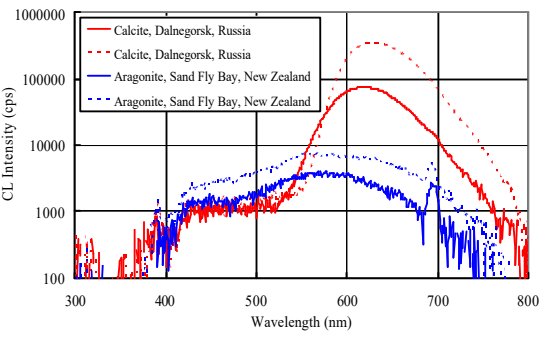
Kuyama, T., Ninagawa, K., Gucsik, A., Bérczi, Sz., Kereszturi, Á., Hargitai, H., & Nagy, Sz. (2008). Combined micro-Raman and cathodolumiescence approach to identify biosignature in carbonates. 39. LPSC, #1240.
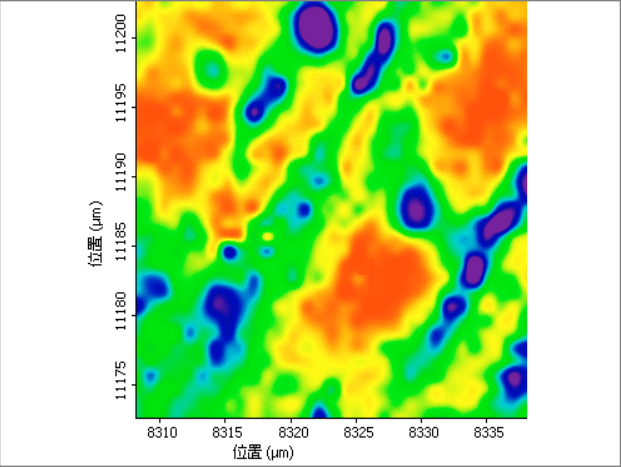
Nishido, H., Sakamoto, M., Gucsik, A., Ninagawa, K., Shichi, R., Toyoda, S., Bérczi, Sz., & Nagy, Sz. (2006). 3D Raman spectroscopical study of quartz from Mt. Oikeyama, Japan, emphasizing the shock-induced microdeformations. XXXVII LPSC, #1651, LPI, Houston.
Pócs, T., Szathmáry, E., Horváth, A., Nagy, B., Sik, A., Bérczi, Sz., Gánti, T., & Kereszturi, Á. (2005). Extremophile cryptobiotic communities in cold and hot deserts. In EANA 5th European Workshop on Astrobiology (Abstract 1).
Bérczi, Sz., & Lukács, B. (1998). Main Lines and Side Tracks: The Highway of Amphibians Seems Wide Enough. In B. Lukács & Sz. Bérczi (Eds.), Side tracks in evolution (MTA-KFKI-07/C; pp. 13–17). MTA Központi Fizikai Kutatóintézet.
Bérczi, Sz., Holba, Á., Lukács, B., & Papp, É. (1998). Monotremes: About the Role of Permotriassic and Jura-Cretaceous Boundaries in the Atherian-Therian Divergence. In B. Lukács & Sz. Bérczi (Eds.), Side tracks in evolution (MTA-KFKI-07/C; pp. 20–41). MTA Központi Fizikai Kutatóintézet.
Bérczi, Sz., Holba, Á., Lukács, B., & Papp, É. (1998). Some notes on Permian and Triassic mammalogenesis. In IGCP Ann. M. V. 1998 (pp. 11).
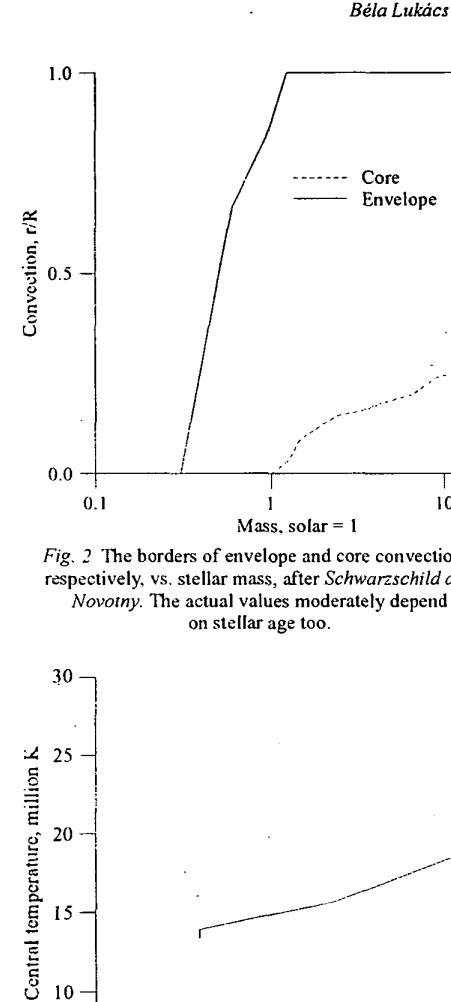
Lukács, B., & Bérczi, Sz. (1998). Some Notes to the Permotriassic Climate Implications from Mammalogenesis. Acta Climatologica, 31, 37–50.Publisher / online source
Bérczi, Sz., Lukács, B., & Török, K. (1993). The Carpathian basin in the Hominization. In B. Lukács, Sz. Bérczi, & K. Török (Eds.), Carpathian Basin: Evolutionary stages (MTA-KFKI-1993-21/C; pp. 68–71). MTA Központi Fizikai Kutatóintézet.
Bérczi, Sz., Vaselli, O., Downes, H., Szabó, Cs., & Coradossi, N. (1991). Ultramafic Xenoliths from the East Carpathian Plio-Pleistocene Alkali Basalts: Geochemical and Petrological Features. In Magmatismo Basico e Sorgenti di Mantello: Aspetti Petrologici e Geodinamici. Conf. (pp. 224).
Bérczi, Sz., Cech, V., & Hegyi, S. (1990). Irreducible Representation of Technologies. [s.n.].
Bérczi, Sz., Lukács, B., & Molnár, I. (1990). Phylogenesis. In B. Lukács, Sz. Bérczi, I. Molnár, & Gy. Paál (Eds.), Evolution: From cosmogenesis to biogenesis (MTA-KFKI-1990-50/C; pp. 84–93). MTA Központi Fizikai Kutatóintézet.
Public outreach works
Bérczi, Sz. (1987). Surviving Structures [Kiállítás]. Exhibition XXVI. INSEA World Congress, 1987, August 24-28., Hamburg.
Bérczi, Sz., & Farkas, T. F. (1986). From Ornamentics to Fourth Dimensions [Kiállítás]. Exhibition on Creativity Symposium of NGO-UNESCO, Párizs, 1986 febr.3-7.
Bérczi, Sz. (1986). New Double-Frieze Types in the Avarian Communal Art [Kiállítás]. Lect. on Symmetry Symposium and Exhibition. Darmstadt Technical University, 1986. June 13-17., Darmstadt.
Further publications by topic
Further research
Futó, P., & A., G. (2025). Carbon-rich mineral composition of silicate-dominated rocky planets in a large fraction of Low-Mg/Si planetary systems. LPSC, abstract #1074..
J., F., & Futó, P. (2025). Limitations of the zircon dating in shock metamorphic rocks on Earth. LPSC, abstract #2705.
Futó, P., & Gucsik, A. (2024). Rocky exoplanets with Ca – and Al – rich crustal and accessory mantle minerals.. LPSC, abstract #abstract 1091.
Futó, P., & Gucsik, A. (2023). Implications for the bulk elemental composition of terrestrial planets II. The effect of the variations of C/Si ratio on the bulk mineralogy of rocky planets.. LPSC, abstract #abstract 1072.
Futó, Péter (2022). The rocky planets with magnesium – depleted mantle composition.. LPSC, abstract #1.
Gucsik, A., Futó, P., Szarvas, R., Nagy, A., Nagy, D., Simonia, I., Vanyó, J., Csámer, Á., Rázsi, A., Kristály, F., & Veres, M. (2021). Micro-Raman Sprectroscopy of the Barberton Impact Spherules from South Africa: An Application to the Identification of Shock Metamorphism. LPSC, abstract #2780.
Futó, Péter (2021). The rocky planets with magnesium – rich mantle composition.. LPSC, abstract #1.
Futó, P., & Gucsik, A. (2020). A supermassive terrestrial exoplanet in the Kepler 277 planetary system. LPSC, abstract #1055.
Futó, Péter (2019). Modeling the bulk composition for the large terrestrial planet: Kepler- 328 b.. LPSC, abstract #1306.
Futó, Péter (2019). Possible formation scenarios and mineralogical types of carbon-rich solid planets.. LPSC, abstract #1307.
Futó, P., & Gucsik, A. (2019). The carbon-rich composition and planetary habilitiby. AGU, abstract #DI43A-0042.
Futó, P., & Gucsik, A. (2018). Basic mineralogical models for silicate- and carbon-rich mega-Earths considering compositional and geophysical constraints.. LPSC, abstract #1453.
Futó, Péter (2018). KEPLER-145B AND K2-66B: A KEPLER- AND A K2-MEGA-EARTH WITH DIFFERENT COMPOSITIONAL CHARACTERISTICS.. LPSC, abstract #abstract 1224.
Futó, Péter (2014). A new planet-class: carbon-silicate planets.. LPSC, abstract #1046.
Su, K. Y., Morrison, S. J., Malhotra, R., Balog, Z., & Smith, P. S. (2014). The Debris Structures of HD 95086 - A Young Analog of HR 8799. DPS, abstract #204.02.
Futó, P., & Gucsik, A. (2011). Carbon planet model with SiC mantle compound. LPSC, abstract #abstract# 1227.
Szalai, N., Kiss, C., Balog, Z., & Stansberry, J. (2011). Sub-arcminute structure of the zodiacal emission. EPSC-DPS Joint Meeting, abstract #EPSC-DPS2011-819.
Eőry, M., Futó, P., & Gucsik, A. (2010). Microsctructural evolution of the fractal dust aggregates. LPSC, abstract #1023.
Bérczi, Sz., Brezsnyánszky, K., Detre, Cs., Ditrói-Puskás, Z., Fáy, N., Holba, Á., Józsa, S., Kubovics, I., Lukács, B., Szakmány, Gy., & Tóth, I. (1997). High titanium basalts in the Solar System. (22th Symp. Antarctic Meteorites, Tokyo, NIPR) p.9.
Stellar evolution and the origin of elements
Futó, P., & Gucsik, A. (2025). The stellar Mg/Si, C/O, Ca/Si, Al/Si, Na/Si, and Fe/Si ratios and the mineral diversity of rocky exoplanets. Open Astronomy, 34(1), 20250017. https://doi.org/10.1515/astro-2025-0017
The researchers use nearby stars' chemical compositions to estimate the minerals that might form rocky planets around them. The element ratios suggest that Solar System compositions are not typical in every respect; these are predictions rather than direct measurements of exoplanet rocks. Source
Futó, P., & A., G. (2025). The variations of the original planetary abundance ratios in solar-like stars polluted by terrestrial planetary materials. LPSC, abstract #1.
Futó, P., & Gucsik, A. (2024). Supersolar O/Si ratio in the most of low – C/O G - and F – type stars. Implications for the oxidized conditions in rocky planetary mantles.. LPSC, abstract #abstract 1093.
Futó, P., & A., G. (2023). Implications for the bulk elemental composition of terrestrial planets I. The stellar and planetary S/Fe molar ratio. LPSC, abstract #1070.
Kodolányi, J., Stephan, T., Trappitsch, R., Hoppe, P., Pignatari, M., Davis, A., & Pellin, M. (2016). Iron and Nickel Isotope Measurements on SiC X Grains with CHILI. Meteoritical Society, abstract #6443.
Lugaro, Maria (2016). Stellar Grains in the Laboratory: Messengers from the Sky. Meteoritical Society, abstract #6271.
Akram, W., Schönbächler, M., & Lugaro, M. (2015). Potential Collateral Effects in Stable Hafnium Isotopes Due to the S-Process Production of the Short-Lived Radionuclide 182Hf?. LPSC, abstract #2419.
Fujiya, W., Hoppe, P., Zinner, E., Pignatari, M., & Herwig, F. (2014). A Born-Again AGB Star Origin of Type AB Silicon Carbide Grains Inferred from Radiogenic Sulfur-32. LPSC, abstract #1515.
Thiemens, M., Moynier, F., Thiemens, M., Shaheen, R., Chong, K., Koeberl, C., Popp, C., & Gyollai, I. (2012). Zn and C isotopic variations associated with Neoproterozoic Ice Ages. LPSC, abstract #2499.
Detre, Cs. H., Tóth, I., Gucsik, A., Kiss, Á., Uzonyi, I., & Bérczi, Sz. (1998). What took place at the Permo-Triassic boundary? Cosmic spherules as messengers of a nearby supernova explosion. 29th Lunar and Planetary Science Conference (Abstract No. 1030). Lunar and Planetary Institute.